

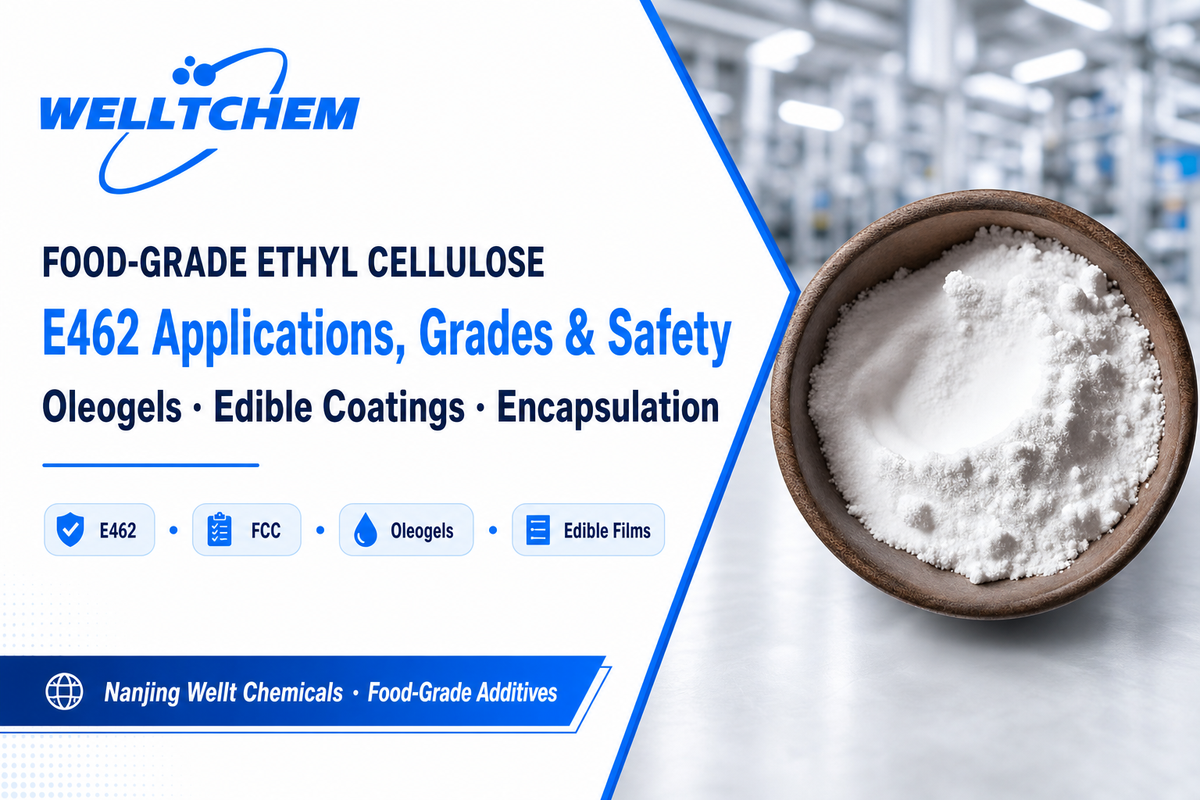
Food-Grade Ethyl Cellulose: Applications, Grades & Safety in the Food Industry
Updated June 2026 Most cellulose ethers thicken water. Ethyl cellulose does the opposite, and that single quirk is why ethyl cellulose food grade applications keep growing across coatings, oleogels, and capsules. Food-grade ethyl cellulose (EC, E462) is the only modified cellulose that’s insoluble in water but soluble in ethanol and
Read More
UV Absorber & Light Stabilizer for Plastic & Polymer
Protecting Plastics and Polymers from UV Degradation for Enhanced Durability and Longevity Plastics and polymers are our day-to-day materials that find applications in packaging, in the automotive sector, in construction, and also in consumer products. These are materials that, when exposed to UV radiation for long periods and under extreme
Read More
UV Stabilizers: Types for Plastics and Polymer Performance
Plastics and polymers are probably amongst the most prominent materials in a myriad of industries that range from packaging to construction, automotive, and consumer goods. Ironically, UV radiation slowly does its work in aging these materials, and the resultant damages are discoloration, cracking, and loss of mechanical constitution. The UV
Read More
UV Stabilizer Masterbatch: UV Protection for Plastics
Plastics are essential to various industries, from packaging to construction, to automotive and consumer goods. However, prolonged exposure to ultraviolet (UV) radiation affects these plastics and causes them to degrade through various processes such as discoloration and loss of mechanical properties, eventually shortening their life. Here comes the role of
Read More
Natural and Synthetic Antioxidant Types & Benefits
Understanding the Differences, Sources, and Health Benefits The primary sense of antioxidants is to shield our bodies from free radicals that damage the molecules inside. A free radical is an unstable molecule that can accelerate aging and many health concerns. Certain types of antioxidants can only be produced in the
Read More
UV Stabilizer Additive for Polymers & Plastics: UV Light Protection
Polymers and plastics are inextricably entwined with every imaginable industry-from automotive and construction to packaging and consumer goods. UV radiation, when received for long durations, reduces the durability and aesthetics of the plastic, further compromising its function. This predicament has electromagnetic radiation protection as a critical factor in the concern
Read More
TSP Cleaner: Your Ultimate Guide to Phosphate & Substitutes
Looking for the best cleaning agent that can effectively clean while always considering safety and being eco-friendly? Welcome to your very complete guide on TSP cleaner—an industry favorite that packs a punch when confronting the most intransigent stains and dried-on grime. But environmental dangers due to phosphates have thrown traditional
Read More
UV Stabilizer Additive for Polymer and Plastic Manufacturing
Polymer and plastic materials form the blueprint for innumerable industries-from packaging to automotive, construction to consumer goods. Endless hours of ultraviolet radiation can disintegrate the polymer’s molecular structure. Identifying this character, UV stabilizer or obscurers can be seen as crucial ingredients in polymer and plastic manufacture. The blog tries
Read More
UV Stabilizers as Plastic Additives in Manufacturing
Plastics stand as one of the crucial elements in the manufacturing process, building everything from days to automobiles. However, from exposure to ultraviolet rays, the plastics undergo degradation leading to dirtiness, cracking, and a loss of mechanical properties through more straightforward means. This is why these UV stabilizers are important
Read More
Secondary Antioxidant Additives: Polymer & Plastic Stabilizers
Polymers and plastics are important to countless industries, ranging from packaging to automobile manufacturing industries. Their durability and longevity depend on certain stabilization processes. There are also secondary antioxidants that are added to protect the polymers and to ensure proper performance so as to prevent degradation over time. Acting
Read More