

![[REFRESH] Irganox 1010 Antioxidant: Complete Guide](https://welltchemicals.com/wp-content/uploads/2024/01/0-3.webp)
Updated June 2026 · Reviewed by the Nanjing Wellt Chemicals technical team
Irganox 1010 is the most widely used primary phenolic antioxidant in the plastics industry, and this guide explains exactly what it does, how much to use, and when to pair it with a co-stabilizer. A sterically hindered phenol with the CAS number 6683-19-8, Irganox 1010 protects polyolefins, engineering plastics, adhesives, and synthetic rubber from the thermo-oxidative degradation that causes yellowing, embrittlement, and loss of strength.
In short: Irganox 1010 (CAS 6683-19-8) is a tetra-functional, sterically hindered phenolic primary antioxidant that scavenges free radicals to stop oxidation in plastics and rubber. It’s typically used at 0.05–0.2% by weight, is non-discoloring and low-volatility, and works best when paired with a secondary antioxidant such as the phosphite Irgafos 168 for melt-processing protection.
Key takeaways
- More antioxidant isn’t always better, past the optimum, excess phenolic can bloom, plate out, and even act as a pro-oxidant.
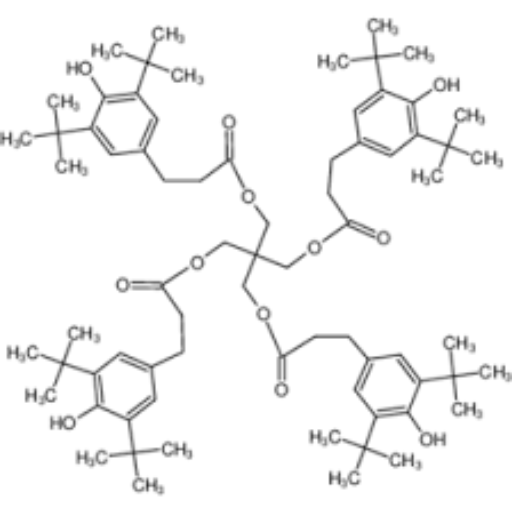
- Its four phenolic groups (molecular weight ~1,177.6 g/mol) give Irganox 1010 low volatility and high extraction resistance, the reason it dominates long-life, high-temperature parts.
- A primary phenolic alone doesn’t cover melt processing; pair it with a phosphite (the Irganox B215 blend) for full coverage.
- Food-contact rules tightened in 2025 (EU Regulation 2025/351), so re-check compliance for recycled-content applications.
Quick Specs: Irganox 1010
| CAS Number | 6683-19-8 |
| Molecular formula | C73H108O12 |
| Molecular weight | ~1,177.6 g/mol |
| Antioxidant type | Primary (sterically hindered phenol), tetra-functional |
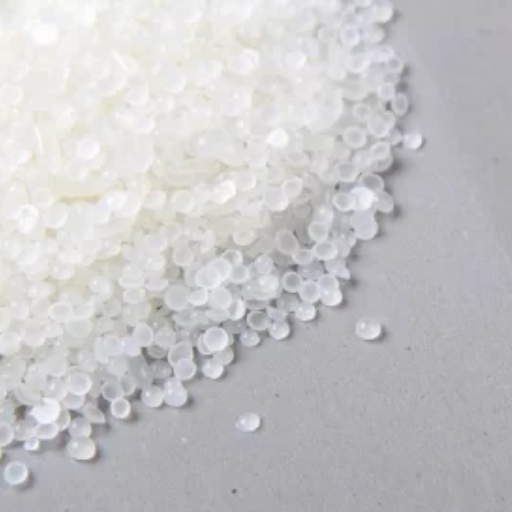
| Appearance | White to off-white crystalline powder or granules |
| Melting point | 110–125 °C |
| Typical loading | 0.05–0.2% (up to 0.4% in some polyolefins) |
| Common synonyms | Antioxidant 1010, Pentaerythritol tetrakis[3-(3,5-di-tert-butyl-4-hydroxyphenyl)propionate] |
Identity and physical data per the U.S. PubChem record (CID 64819).
What Is Irganox 1010?
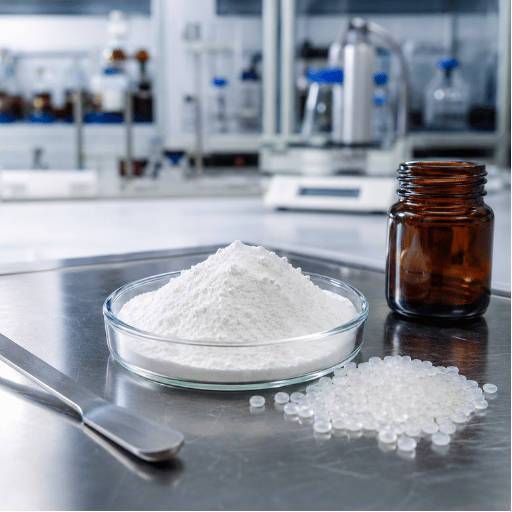
Irganox 1010 is a highly effective primary antioxidant, meaning it interrupts oxidation directly by donating a hydrogen atom to free radicals before they can attack polymer chains. Chemically it’s pentaerythritol tetrakis[3-(3,5-di-tert-butyl-4-hydroxyphenyl)propionate] — a benzenepropanoic acid ester built around a central pentaerythritol core, carrying four hindered-phenol groups. That tetra-functional structure is why one molecule protect organic substrates across various polymers so efficiently.
“Irganox” is BASF’s brand name (written Irganox® 1010 on their datasheets); the same molecule is sold generically as Antioxidant 1010 and under names such as Songnox 1010 and Dovernox 10. In its pure form it’s a white crystalline solid, the regular crystal habit is one visual cue of a high-assay product. Whatever the label, the CAS number 6683-19-8 confirms you’re buying the same compound. It’s registered on the U.S. EPA’s CompTox dashboard and listed under TSCA. For the product datasheet and packaging options, see our Irganox 1010 antioxidant product page. Skip the antioxidant and the cost shows up fast: unstabilized polypropylene can lose well over 50% of its impact strength after roughly 500 hours at 120 °C, the failure mode this additive is built around. Since impurities, not the molecule, decide real-world performance, Wellt ships every lot with a full COA so buyers verify assay and free-phenol content before production.
Chemical Structure & Key Properties
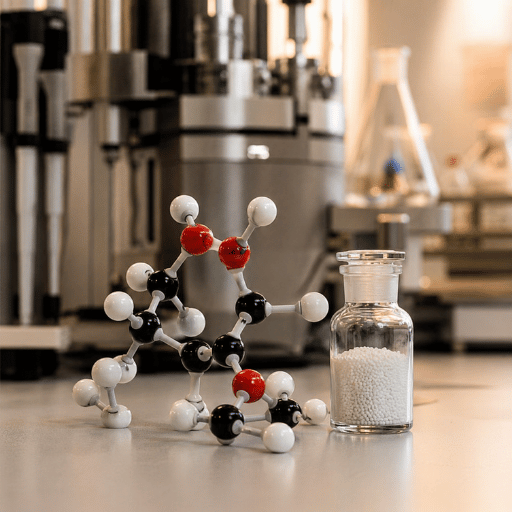
The molecule’s value comes from two features working together: the bulky tert-butyl groups that “hinder” each phenol (slowing unwanted side reactions and preventing discoloration), and the high molecular weight that keeps the additive locked inside the polymer. High molecular weight is a practical advantage, it means low volatility during hot processing and high resistance to extraction by solvents, oils, or hot water over a part’s service life. A low-molecular-weight phenol would volatilize out of the melt during compounding at 230 °C and above, a hidden problem that surfaces later as fading protection. Because Irganox 1010 sits near 1,177.6 g/mol, it resists that loss, which is why Wellt specifies it for long-life, high-temperature parts.
| Property | Value | Why it matters |
|---|---|---|
| Functionality | 4 phenolic groups | Scavenges more radicals per molecule |
| Molecular weight | ~1,177.6 g/mol | Low volatility, stays in the polymer |
| Melting point | 110–125 °C | Melt-blends cleanly during compounding |
| Color contribution | Non-discoloring | Safe for clear and white parts |
| Extraction resistance | High | Survives hot water, oils, solvents |
| Odor / taste | Odorless, tasteless | Suitable for packaging applications |
Property data: PubChem (CID 64819) and supplier technical datasheets.
How Irganox 1010 Works: Primary vs Secondary Antioxidants
![[REFRESH] Irgafos 168: Uses, Benefits & Specifications](https://welltchemicals.com/wp-content/uploads/2024/01/0-1.webp)
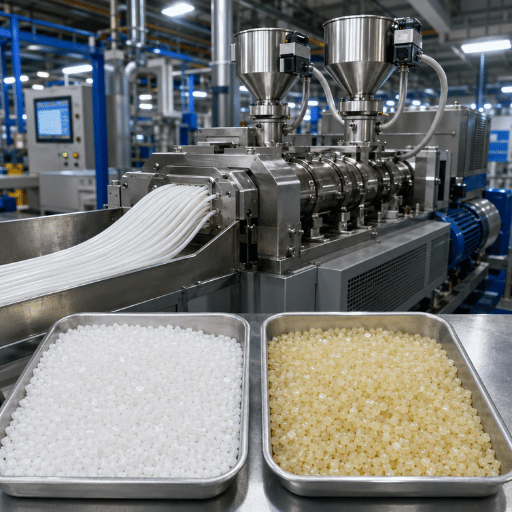
When a polymer is heated or aged, oxygen attacks its chains and produce unstable peroxy radicals. Left alone, those radicals pull hydrogen from neighboring chains, creating a self-feeding chain reaction that breaks the polymer down. We call this radical-trapping mechanism The Hindered-Phenol Protection Cycle: the phenol donates a hydrogen atom to the peroxy radical, neutralizing it, and the bulky tert-butyl groups stabilize the leftover phenolic radical so it can’t restart the damage.
Get this wrong and oxidation runs away in a single processing pass above 200 °C; the root cause is unquenched peroxy radicals, which is why Wellt pairs 1010 with a phosphite co-stabilizer for melt-stage protection, a pairing its in-house compounding trials confirm at production scale.
A Reddit thread on plastic durability summed it up plainly for a general audience: Irganox 1010 “holds the radicals instead of letting them degrade plastics further.” That’s exactly the chain-breaking role of a primary antioxidant.
What is the difference between primary and secondary antioxidants?
A primary antioxidant such as Irganox 1010 is a radical scavenger: it stops oxidation that has already started by neutralizing free radicals. A secondary antioxidant, typically a phosphite like Irgafos 168, works on a different problem: it decomposes the hydroperoxides that form during hot melt processing before they can split into new radicals. Hindered phenols can’t break these down, which is why the two types are nearly always used together.
In practice the phenol guards long-term service life while the phosphite guards the extruder. Compare the secondary options on our Irgafos 168 phosphite antioxidant page.
What Is Irganox 1010 Used For? Applications by Polymer
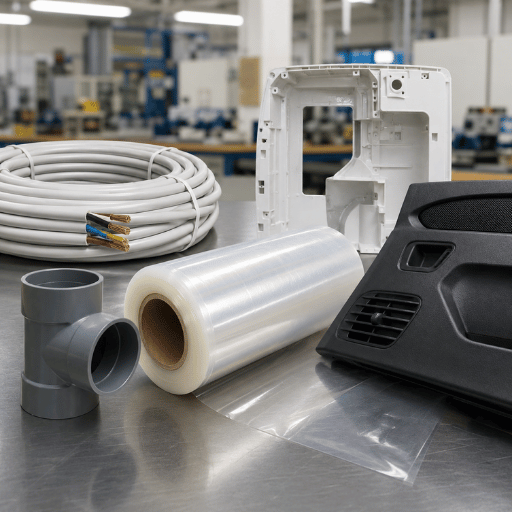
Irganox 1010 is used to protect almost every major thermoplastic and many elastomers from heat aging, the oxidation-driven failure that turns parts brittle and yellow. It’s the default long-term phenolic antioxidant for polyolefins like PP and PE, and it works equally well in engineering resins such as nylon and PET, in hot-melt adhesives, and in synthetic rubber.
For examples of finished adhesive formats, see Hot Melt Adhesive Materials from Teng Yang. The product overview does not establish which antioxidant a formulation contains; additive selection still requires formulation-specific checks.
| Polymer class | Examples | Role of Irganox 1010 |
|---|---|---|
| Polyolefins | PP, HDPE, LDPE, LLDPE | Long-term thermal stabilization |
| Olefin copolymers | EVA, polybutene | Stabilizes during processing |
| Styrene homo- & copolymers | PS, ABS, SBS, SEBS | Prevents yellowing and embrittlement |
| Polyamides | PA6, PA66 (nylon) | Protects during high-temp processing |
| Polyesters | PET, PBT | Limits chain scission during molding |
| Polyacetals | POM | Guards against thermal oxidation |
| Polyurethanes & PVC | PUR foams, flexible PVC | Limits oxidative scorch and aging |
| Adhesives | Hot-melts, EVA-based | Maintains bond strength and color |
| Synthetic rubber | EPM, EPDM, IIR (butyl) | Slows heat-aging in service |
Which polymers need Irganox 1010 the most?
Polyolefins benefit most, because PP and PE are highly prone to oxidation during both processing and outdoor or high-temperature service. A real-world example: researchers studying polypropylene random-copolymer (PP-R) pressure pipes found that a balanced antioxidant package was decisive in avoiding premature failure under hydrostatic pressure and heat, a pure-mechanical pipe still failed early once its stabilizer was consumed. For light-colored fibers and packaging, the non-discoloring, odorless, extraction-resistant profile of Irganox 1010 is the reason it’s specified so often.
Recommended Dosage: The Phenolic Loading Ladder
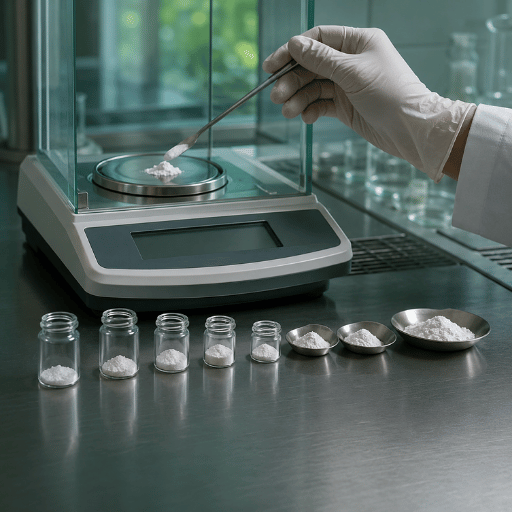
Typical Irganox 1010 loadings run from 0.05% to 0.2% by weight, with some demanding polyolefin applications going up to 0.4%. The right number depend on the polymer and how hard the part will be worked. We organize this as the Phenolic Loading Ladderloading rungs ranked by polymer family and service severity. Treat these as validated starting points, then confirm with your own oven-aging or melt-flow trials, as BASF’s own datasheet recommends.
| Service severity | Typical loading | Example |
|---|---|---|
| Light — short-life, indoor | 0.05–0.08% | Commodity film, low-temp parts |
| Moderate — general purpose | 0.08–0.15% | Injection-molded PP, HDPE goods |
| Heavy — hot/long service | 0.15–0.3% | Pipe, automotive under-hood, fiber |
| Severe — multi-pass / recyclate | 0.2–0.4% (often blended) | Re-stabilized recycled polyolefin |
📐 Engineering Note — working the math

Dosing is a simple weight calculation. For a 500 kg batch of polypropylene compound at a 0.1% loading: 500 kg × 0.001 = 0.5 kg of Irganox 1010. If you feed it through a 20% additive masterbatch instead of neat powder, you let the masterbatch down at 0.5%: 500 kg × 0.005 = 2.5 kg of masterbatch, which carries the same 0.5 kg of active. Powder grades dust during feeding, so many compounders prefer the low-dust Irganox 1010 FF (free-flowing) grade for clean dosing.
Doubling the dose doesn’t double protection. Past the optimum, excess phenolic can bloom to the surface, plate out on tooling, and migrate out of the part; antioxidants can even flip to pro-oxidant behavior at high concentration. Find the lowest loading that passes your aging spec, rather than over-insuring.
Irganox 1010 + Irgafos 168 Pairing & Ready Blends
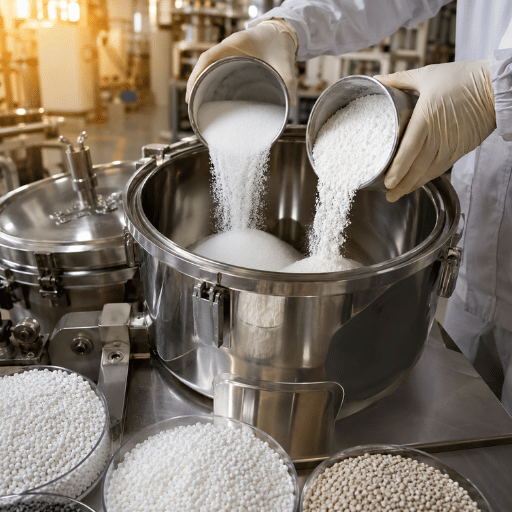
Because a primary phenol can’t decompose hydroperoxides, most production formulas pair Irganox 1010 with a secondary phosphite. The classic partner is Irgafos 168, and the combination is so common it’s sold pre-blended. The most widely used ready blend, Irganox B215, combines the two so that one addition cover both melt-processing stability and long-term heat aging. This phenol-plus-phosphite pairing is well established in the patent literature, for example, a stabilizing system claiming tris(2,4-di-tert-butylphenyl) phosphite together with pentaerythritol tetrakis hindered phenol. Relying on a phenol alone is a common mistake, it leaves the melt-processing window unprotected, so pellets can yellow on a second extrusion pass at 230 °C. Because the phosphite decomposes the hydroperoxides a phenol can’t, Wellt supplies ready B215 blends at a fixed 1:2 ratio with batch records. In a 230 °C twin-screw compounding line running recycled polypropylene, that single addition holds melt-flow within spec across 3 extrusion passes.
“The ratio of 1:2 or 1:3 of phenolic antioxidant to secondary stabilizer provides the best results in terms of cost and performance for polyolefin processing.”
Irganox B215, explained
Irganox B215 is a ready-made blend of Irganox 1010 and Irgafos 168 in a 1:2 ratio. Buying the blend save a weighing step and guarantees a consistent phenol-to-phosphite ratio batch to batch. If you would rather dose the components separately, our Irganox B215 composite antioxidant page walk through the trade-offs.
Irganox 1010 vs 1076 vs 245 vs 1098: The Primary-AO Tradeoff Test
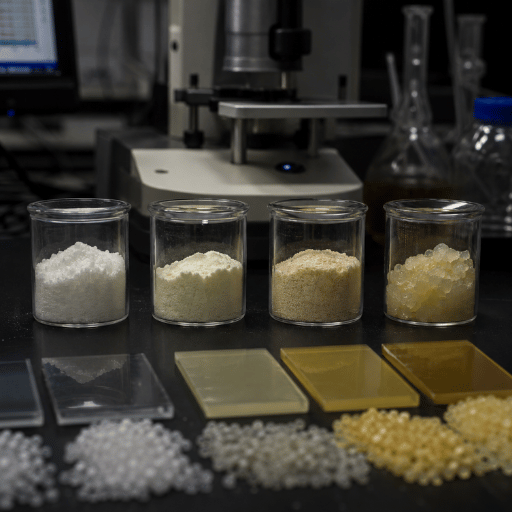
All four are hindered-phenol primary antioxidants from the same family, but they trade off molecular weight, volatility, and target polymer. Run them through the Primary-AO Tradeoff Test: pick the grade whose volatility and migration profile match your service conditions, not simply the cheapest or most familiar one. Irganox 1010 carries four phenolic groups; Irganox 1076 carries one, which is why analytical methods see roughly a 4:1 active-group ratio between them. For an automotive under-hood part rated to 150 °C over 3,000 hours, 1010’s low volatility wins; for a thin PE film line at 200 °C, 1076 disperses more easily, and Wellt stocks both grades.
| Grade | Structure | Best fit |
|---|---|---|
| Irganox 1010 | Tetra-functional, MW ~1,178 | Long-life, high-temp parts; lowest volatility |
| Irganox 1076 | Mono-functional, MW ~531 | PE film and easy-dispersion lines; more migratory |
| Irganox 245 | Di-functional, glycol-linked | Low-color fibers, styrenics, hot-melt PSAs |
| Irganox 1098 | Di-functional, amide-linked | Polyamides (nylon), where amide groups help anchoring |
Choose 1010 when low volatility and extraction resistance matter most. Compare grades on our Antioxidant 1076 and Antioxidant 1098 pages.
Price, Grades & How to Source

Irganox 1010 is a mature, widely produced additive, so pricing is competitive, driven largely by raw-material costs, order volume, and grade. Generic Antioxidant 1010 trades well below branded BASF material at comparable purity. Because published market prices move with feedstock costs, treat any quoted figure as indicative and request a live quote for current pricing and minimum order quantity.
On grade: the standard powder is fine for most compounders, while the free-flowing Irganox 1010 FF grade reduces dust and feeds more cleanly in automated dosing. What buyers actually compare isn’t just the per-kilogram price but the certificate of analysis, assay/purity, volatiles, color (transmittance), and free-phenol content, because those determine whether a generic truly matches branded performance. Wellt supplies both powder and FF grades with full COA and sample support; see the Irganox 1010 product page or the wider hindered phenol antioxidant range. A cheap, low-assay generic is often a false economy: free-phenol content above roughly 0.5% can cause discoloration and premature failure in service. Because the molecule is identical but the impurities aren’t, Wellt lists assay, volatiles, color, and free-phenol on every COA so buyers compare like-for-like. For a 1-ton production order, Wellt provides a 200 g sample and in-house COA before shipment so the grade is proven against your line.
Safety, Food Contact, Shelf Life & Storage
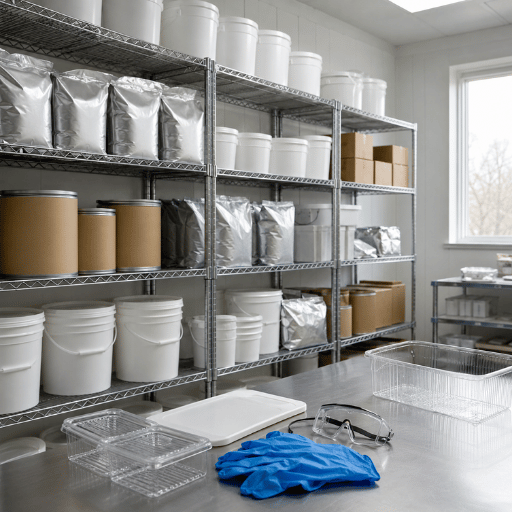
Irganox 1010 has a long history of safe industrial use and is cleared for many food-contact plastics under both U.S. FDA regulations (21 CFR) and the EU plastics framework. It is registered under TSCA and REACH. Migration into food has been studied extensively; one classic analysis tracked the movement of Irganox 1010 from polypropylene packaging into food simulants under different temperatures, and regulators set migration limits accordingly.
Compliance is not static. In February 2025 the EU issued Regulation (EU) 2025/351, amending Regulation (EU) No 10/2011 on plastic food-contact materials with stricter purity, labelling, and recycled-plastic rules, so re-confirm your compliance paperwork, especially for recyclate. For food-contact converters this is a real risk: a non-compliant lot can trigger a costly recall once specific migration limits (often set near 60 mg/kg) are exceeded. Because the rules tightened in 2025, Wellt provides current food-grade documentation and REACH/TSCA status on request. On automotive and medical packaging lines, converters run migration checks at 40 °C for 10 days, and Wellt’s in-house lab maps each production lot to those limits.
What is the shelf life of Irganox 1010?
Stored in its original sealed packaging, away from heat, direct sunlight, and moisture, Irganox 1010 generally keeps its specified properties for about two years. It’s a stable solid with no special hazard handling beyond standard dust-control practice, but always follow the supplier’s safety data sheet for your specific grade and region.
Market Outlook: Recyclate Re-stabilization & Greener Antioxidants
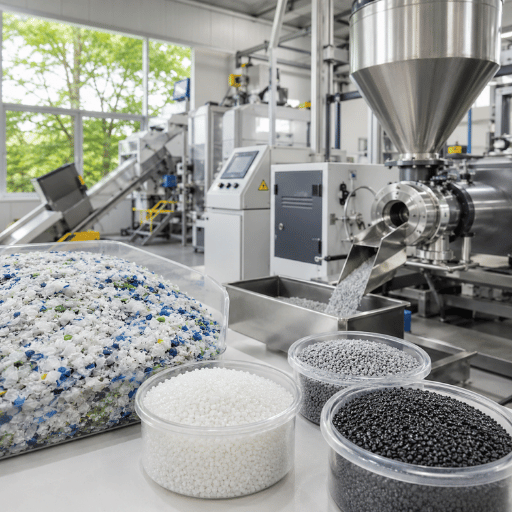
The most important shift for buyers isn’t market size, it’s where the demand is coming from. Recycled-content mandates and the tighter 2025 EU food-contact rules are pushing compounders to re-stabilize recyclate, because reclaimed polyolefin arrives with much of its original antioxidant already spent. That keeps a well-loaded primary phenolic like Irganox 1010 a recurring line item in recycling formulations, not a one-time addition.
Sustainability pressure is also driving research into greener antioxidants. Academic groups have tested replacing Irganox 1010 with bio-based options such as quercetin and tocopherol (vitamin E), and, more usefully for the near term, hybrid systems: one study found that a mixture of lignin and Irganox 1010 delivered the highest antioxidant efficiency in both recycled and virgin polypropylene, outperforming either additive alone. For context only, market analysts size the broader plastic-antioxidants segment in the multi-billion-dollar range with steady single-digit growth, but the practical takeaway is the driver, not the dollar figure: if you handle recyclate or food-contact parts, budget for re-stabilization and watch the 2026 regulatory pipeline. Recyclers re-stabilizing post-consumer polypropylene often under-dose and then watch melt-flow index drift more than 20% within a single extrusion pass, an expensive problem on automotive and packaging production lines. As spent antioxidant must be replaced rather than topped up, Wellt helps set re-stabilization loadings for recyclate streams.
Frequently Asked Questions
What is Irganox 1010 used for?
View Answer
As a primary antioxidant, Irganox 1010 protects plastics, adhesives, and synthetic rubber from thermo-oxidative degradation, the heat- and oxygen-driven breakdown that turns parts yellow and brittle and saps their strength over a working life. It is added at roughly 0.05 to 0.2 percent during compounding and is especially common in polyolefins such as PP and PE, in engineering plastics like nylon, PET, and POM, in polyurethanes and hot-melt adhesives, and in rubbers such as EPDM and SBS.
What is the full chemical name of Irganox 1010?
View Answer
The full chemical name is pentaerythritol tetrakis[3-(3,5-di-tert-butyl-4-hydroxyphenyl)propionate], also written as tetrakis[methylene(3,5-di-tert-butyl-4-hydroxyhydrocinnamate)]methane. Its CAS number is 6683-19-8, its molecular formula is C73H108O12, and its molecular weight is about 1,177.6 g/mol. It is also sold generically as Antioxidant 1010, so quoting the CAS number is the safest way to confirm you are buying the same compound rather than a different grade.
What is the recommended dosage of Irganox 1010?
View Answer
Typical loadings are 0.05 to 0.2 percent by weight, with some demanding polyolefin applications reaching 0.4 percent, often as part of a blend. Light-duty indoor parts sit near the bottom of that range, while pipe, automotive, fiber, and recycled-content compounds sit near the top. When over-dosing causes blooming and diminishing returns, start from these ranges and confirm the lowest effective level with your own oven-aging or melt-flow trials on your resin rather than over-insuring with extra additive that may bloom.
What is the price of Irganox 1010?
View Answer
Pricing moves with feedstock costs, order volume, and grade, and generic Antioxidant 1010 usually costs well below branded BASF material at equal purity for the same assay. With no single published list price, request a live quote for current pricing and minimum order quantity.
Is Irganox 1010 the same as Antioxidant 1010 and Songnox 1010?
View Answer
Yes. “Irganox 1010” is BASF’s brand name, while Antioxidant 1010, Songnox 1010, and Dovernox 10 refer to the same molecule made by other manufacturers. They all share CAS 6683-19-8 and the identical pentaerythritol-tetrakis structure, so the base chemistry does not change. Where they differ is in quality markers such as assay, color, volatiles, and residual free-phenol, which is why experienced buyers compare certificates of analysis closely and qualify a sample against their own aging spec before switching suppliers in production.
Can Irganox 1010 be used in food-contact plastics?
View Answer
Yes, within defined limits. Irganox 1010 is cleared for many food-contact uses under U.S. FDA 21 CFR rules and the EU plastics regulation, subject to migration limits. Because the EU tightened its rules with Regulation (EU) 2025/351 in 2025, verify current compliance first.
What is the difference between Irganox 1010 and Irgafos 168?
View Answer
Irganox 1010 and Irgafos 168 do different jobs and are usually used together. Irganox 1010 is a primary phenolic antioxidant that scavenges free radicals to protect long-term service life, while Irgafos 168 is a secondary phosphite antioxidant that decomposes hydroperoxides during hot melt processing. Combining them, for instance in the Irganox B215 blend, covers both failure modes that neither additive handles alone.
Need Irganox 1010 with a verified COA?
Wellt supplies Irganox 1010 (powder and FF grades), Irgafos 168, and ready B215 blends with full documentation and samples.
About This Guide
This guide draws on public chemical databases (PubChem, U.S. EPA), peer-reviewed studies on antioxidant migration and recyclate stabilization, and our own experience supplying Irganox 1010 powder and FF grades to plastics compounders. Loading figures are starting points for trials, not guarantees, verify against your own aging specifications. Reviewed by the Nanjing Wellt Chemicals technical team.
References & Sources
- Antioxidant 1010, CID 64819U.S. National Library of Medicine, PubChem
- Irganox 1010 Chemical Details (DTXSID1027633)U.S. EPA CompTox Dashboard
- Antioxidant migration with different food simulants and temperaturesU.S. EPA HERO
- Commission Regulation (EU) 2025/351EUR-Lex, European Union
- Impact of Natural and Synthetic Antioxidants on the Stability of HDPEPMC, National Institutes of Health
- Recent advances in bio-based functional additives for polymersProgress in Materials Science (ScienceDirect)
- An Effective Package of Antioxidants for Avoiding Premature Failure in PP-R Plastic PipesPolymers (MDPI)
- US Patent 5,846,656, Stabilization systems for polymeric materialGoogle Patents
Related Articles
- Irgafos 168 antioxidant guidethe phosphite co-stabilizer that pairs with Irganox 1010
- Ultimate guide to Antioxidant B215the ready 1010 + 168 blend
- The ultimate guide to plastic antioxidantsprimary vs secondary antioxidants explained
- Types of synthetic antioxidanthow phenolic, phosphite, and thioester additives compare