

![[REFRESH] Benzophenone-3 (UV-9): Uses & Benefits](https://welltchemicals.com/wp-content/uploads/2024/01/0-4.webp)
Updated June 2026 · Reviewed by the Nanjing Wellt Chemicals technical team
Benzophenone-3 – also written benzophenone 3, and known as oxybenzone, BP-3, or UV-9 – is an organic UV absorber built around the benzophenone ring system. It’s widely used for two jobs that rarely get discussed together: it filters ultraviolet light in sunscreens and cosmetics, and it protects plastics, coatings, and adhesives from UV degradation. This guide covers both identities, the chemistry behind them, current safety evidence, the 2026 regulatory picture, and how to specify the material for industrial use.
- Benzophenone-3, oxybenzone, BP-3, and UV-9 are all the same molecule – CAS 131-57-7.
- Its industrial use as a polymer/coating UV absorber isn’t covered by the cosmetic restrictions making headlines.
- A UV absorber slows UV damage but doesn’t stop polymer oxidation – pair it with a HALS for outdoor service.
- The “carcinogen” label belongs to the parent ketone benzophenone (IARC 2B), not to approved BP-3 sunscreen use.
Quick Specs, Benzophenone-3 (BP-3)
| Common names | Benzophenone-3 · Oxybenzone · BP-3 · UV-9 |
| IUPAC name | 2-Hydroxy-4-methoxybenzophenone |
| CAS / EC | 131-57-7 / 205-031-5 |
| Formula / MW | C14H12O3 / 228.24 g/mol |
| Appearance | White to pale-yellow crystalline powder |
| Melting point | ~62 °C (supplier ranges 62–72 °C) |
| UV range / peak | UVB + short UVA, ~270–350 nm / peak ~288 nm |
| Water solubility | Practically insoluble; oil/solvent soluble |
| Function | Organic UV absorber / light stabilizer |
Source: PubChem CID 4632; supplier technical data.
What Is Benzophenone-3? (BP-3, Oxybenzone, and Its Other Names)
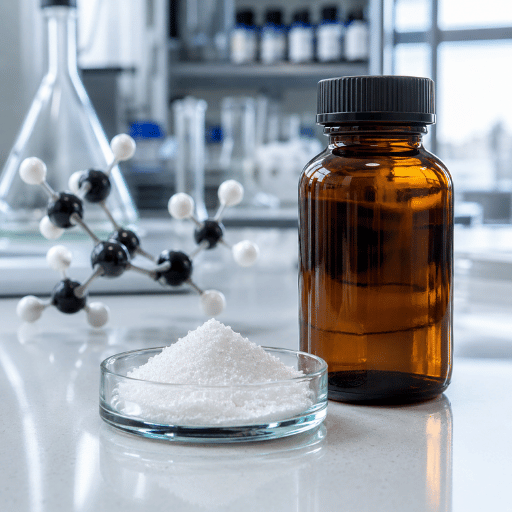
Benzophenone-3 is the INCI name for 2-hydroxy-4-methoxybenzophenone (CAS 131-57-7), a member of the benzophenone family of aromatic ketones, registered as PubChem CID 4632 (NIH). The same compound is sold as oxybenzone in personal-care contexts and as UV-9 (historically CYASORB UV-9) in polymer and coating contexts. One molecule, several trade identities – which is exactly why purchasing conversations get confused. In practice the naming overlap is a real procurement risk: a buyer who orders “oxybenzone” for a cosmetic line can be shipped an industrial UV-9 lot, because both move under CAS 131-57-7 – so Wellt quotes grade and end-use on every benzophenone-3 order to head off that mistake.
The molecule pairs a hydroxyl group, a methoxy group, and a ketone bridge between two aromatic rings. That arrangement is what lets it soak up ultraviolet energy, and it’s shared, with small variations, across the wider benzophenone series used as UV absorbers.
| Name | Chemical identity | Typical role |
|---|---|---|
| Benzophenone (parent) | Diphenyl ketone | Photoinitiator; IARC 2B |
| Benzophenone-1 (BP-1) | 2,4-Dihydroxybenzophenone | UV absorber, BP-3 metabolite |
| Benzophenone-2 (BP-2) | 2,2′,4,4′-Tetrahydroxybenzophenone | UV absorber |
| Benzophenone-3 (BP-3) | 2-Hydroxy-4-methoxybenzophenone | Broad-band UV filter / absorber |
| Benzophenone-4 (BP-4) | Sulisobenzone | Water-soluble UV filter |
| Benzophenone-6 (BP-6) | 2,2′-Dihydroxy-4,4′-dimethoxybenzophenone | UV absorber |
| Benzophenone-8 (BP-8) | Dioxybenzone | UVA/UVB filter |
| Benzophenone-9 (BP-9) | Disodium dihydroxy dimethoxy disulfobenzophenone | Water-soluble UV filter |
| Benzophenone-12 (BP-12) | 2-Hydroxy-4-octyloxybenzophenone | Polymer UV absorber (UV-531) |
Is benzophenone-3 the same as oxybenzone?
Yes. Oxybenzone is the common (USAN/INCI) name for benzophenone-3; both refer to 2-hydroxy-4-methoxybenzophenone, CAS 131-57-7. “BP-3” is the shorthand used in toxicology and biomonitoring literature, and “UV-9” is the legacy industrial designation. When a supplier quotes any of these four names, you’re buying the same chemical – the difference that matter is purity grade and intended end-use, not the label.
How Benzophenone-3 Absorbs UV, and Why It Eventually Fades
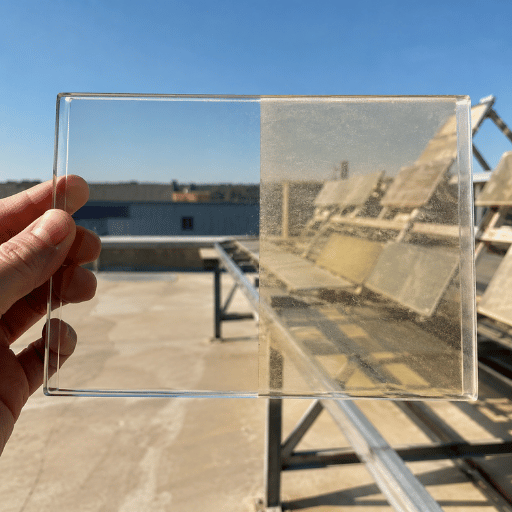
Benzophenone-3 works inside BP-3’s 290-350 nm Absorption Window: it captures ultraviolet photons across roughly 270-350 nm, with peak absorption near 288 nm in the UVB band and a secondary shoulder toward short-wave UVA around 350 nm. In a polymer matrix the practical protective window stretches to about 290-400 nm.
The mechanism is elegant. Its hydroxyl group sits hydrogen-bonded to the neighbouring carbonyl, and when a UV photon is absorbed the molecule shifts through an intramolecular keto-enol tautomerism, re-radiating the energy harmlessly as low-grade heat rather than letting it break chemical bonds. That self-resetting cycle is why a small loading can protect a much larger mass of resin or skin – but it also explains why protection is never permanent: each absorbed photon is a chance for a side reaction, and over months of sun exposure a fraction of the absorber is consumed, after which yellowing and embrittlement accelerate. The catch shows up in the field: a film producer who leans on benzophenone-3 alone at 0.3% often sees outdoor parts yellow within months, because the absorber gets consumed faster than the polymer fails – which is the structural reason a HALS gets added at 0.2-0.5%.
A UV absorber like BP-3 requires path length, it needs to be between the molecule it’s trying to protect (the chromophore) and UV light. This gives it limited benefit on films, coatings, and near-surface layers (the first few microns), which is why we often see blends of UV absorbers and <a “=”” href=”https://welltchemicals.com/<a href=” https:=”” light-stabilizers=”” welltchemicals.com=””>light-stabilizers/hindered-amine-light-stabilizer/”>hindered-amine light stabilizers (HALS), with the HALS tackling radicals at the surface where absorbance is weak.
Where Benzophenone-3 Is Used: From Sunscreen to Plastics
![[REFRESH] Irgafos 168: Uses, Benefits & Specifications](https://welltchemicals.com/wp-content/uploads/2024/01/0-1.webp)
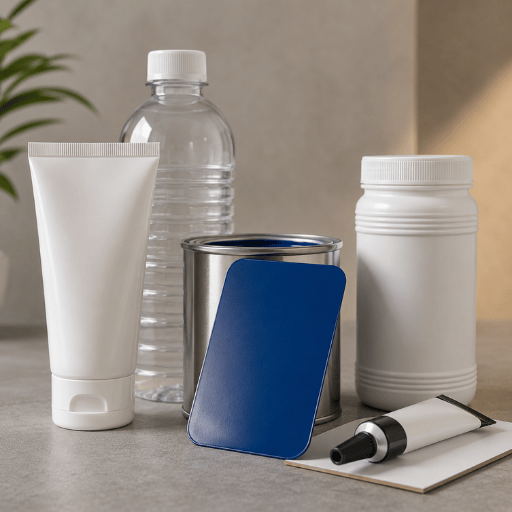
Benzophenone-3 shows up in three broad domains, each with its own loading logic: the personal-care / cosmetic market, plus polymer and coating work where the molecule has been a workhorse UV absorber for years. A common mistake is treating all three the same: a 6% cosmetic dose is wrong in a polymer, because the resin needs only 0.1-0.5% and overdosing is expensive and can cause blooming on the part surface.
| Domain | Function | Typical loading |
|---|---|---|
| Sunscreen / cosmetics | Skin UV filter (UVB + short UVA) | ≤6% (EU face/hand/lip), 2.2% body |
| Nail polish / personal care | Protects formulation colour from UV | up to ~1% |
| Plastics & films | UV absorber / light stabilizer | 0.1–0.5% |
| Coatings & adhesives | UV absorber, gloss/colour retention | 0.2–1% |
In the polymer and coating columns below, benzophenone-3 belongs to the same family of products that Wellt offers as plastic UV absorbers, sitting in our portfolio of light stabilization solutions alongside our range of hindered amine light stabilizers (HALS). For a deeper dive on UV absorber types, explore our Guide to UV Absorbers for Plastics.
Benzophenone-3 vs Other UV Filters and Absorbers

The best UV absorber is dependent on what you need to protect – it can’t be universal. That’s what led us to the Substrate-First UV Absorber Triangle: when choosing UV absorbers, ask what are you protecting – skin, a surface film (like coating or paint), or mass polymer – before deciding on the molecule. BP-3 is an affordable, low-toxicity, broad spectrum option with excellent acid and water resistance, however, its performance in outdoor polymeric materials pales compared to benzotriazoles and HALS.
| Absorber | Best substrate | UV range | Key limitation |
|---|---|---|---|
| Benzophenone-3 | Skin, general plastics, coatings | UVB + short UVA | Moderate polymer durability |
| Avobenzone | Skin (UVA) | UVA | Photo-unstable alone |
| Octinoxate | Skin (UVB) | UVB | Narrow band |
| Benzotriazole (e.g., UV-326/328) | Outdoor polymers, films | UVA/UVB | Higher cost |
| HALS (e.g., 770/944) | Bulk + surface polymer | Radical scavenger (not an absorber) | Not for acidic systems |
| TiO2 / ZnO | Skin, opaque coatings | Broad (physical) | Opacity, dispersion |
Published data in technical and patent literature offer little ambiguity for high-performance outdoor applications such as fiber polypropylene: light-stabilizing by the benzophenone class lags far behind that achieved with a low molecular weight HALS. However, BP-3 isn’t without merit: the key is using it properly – as a cost-effective absorber for non-extreme, indoor-to-mild outdoor exposure applications, in combination with a HALS when true outdoor service life is required. Its use as a polymer UV absorber (UV-9) is documented in stabilization patents such as WO2016081823A1.
Is Benzophenone-3 Safe? The Health Evidence Explained

Benzophenone-3 has a long and established regulatory approval list, appearing in sunscreens worldwide. Studies do indicate that BP-3 is absorbed to some extent via skin, and that it does show some weak hormone-related activity in the lab, justifying strict limits to concentration rather than complete bans. About 97 percent of the United States population has some levels of detectable oxybenzone in their bodies, with one survey of 1,457 urine samples found that 96.8 percent tested positive, demonstrating how commonly it’s used in skin care products to protect the skin from UV radiation.
BP-3 increases activation of estrogen receptors in cell studies in vitro and can oppose activity of progesterone and androgen receptors in these and also can reduce serum testosterone concentrations of men from some human studies. The animal literature in vivo is somewhat mixed: studies on zebrafish, for instance, can’t detect evidence of any estrogenic effects of BP-3, which adds to some of the ongoing controversy regarding its action. Many of BP-3’s estrogenic activities occur as a result of in vitro studies of BP-3 in estrogen responsive MCF-7 human breast cancer cells; in some research reproductive end points may be problematic but determining the relevance of these findings from such models to human relevant dosage level remain ambiguous. Studies demonstrate that BP-3 is absorbed through placenta and blood-brain barrier; detectable levels of BP-3 in breast milk are possible in lactating women; and BP-3 is also a well-known photoallergen, whereby in 1 study, roughly 25% of the 82 subjects tested to date exhibiting photoallergic contact dermatitis responded to BP-3.
“The SCCS considers that benzophenone-3 is safe for the consumer when used as a UV-filter up to a maximum concentration of 6% in face, hand and lip products, and 2.2% in body products.”
Detection in urine or blood is different from a demonstration that the levels harm you. Biomonitoring is an indication of exposure, not indication of a dose-response relationship that will cause adverse effect or toxic response. The good faith read on all of the evidence, however, is BP-3 does indeed create the endocrine concerns that demand limits and careful vigilance, not a conclusion that it’s harmful at cosmetics.
Is benzophenone a carcinogen?
And where names count. In the case of the parent chemical, benzophenone (the unsubstituted ketone), the International Agency for Research on cancer IARC has grouped it as “Group 2B possibly carcinogenic to humans.” Benzophenone-3 (oxybenzone), however, is another substance altogether (an alkylated molecule and the IARC classification relates only to the original), and is currently an approved chemical used as a cosmetic UV filter. The regulator’s decision- to continue use will be reiterated by Australia’s Therapeutic Goods Administration (TGA) in 2025. To combine these is the most prevalent mistake reported in consumer coverage.
Benzophenone-3 Regulations: EU, UK 2026, FDA and Reef Bans

Benzophenone-3 is approved in most areas; though standards of allowable level and actual form of usage differ between regions. Table 1The Benzophenone-3 Regulatory Crosswalkampsummarizes some of this variation that appears to be dispersed in the various agency PDFs. For an EU buyer the practical risk is shipping non-compliant stock, because a body lotion built at the old 6% level now fails the 2.2% body cap under Regulation (EU) 2022/1176, which the SCCS lowered on exposure grounds.
| Jurisdiction | Status | Limit | Note / date |
|---|---|---|---|
| EU | Permitted UV filter | 6% face/hand/lip; 2.2% body; 0.5% formulation protection | Reg (EU) 2022/1176 |
| UK | Permitted, limits aligned to EU | 6% face/hand/lip; 2.2% body | SI 2025/901 — in force 21 Jan 2026 (sell-through 21 Jul 2026) |
| USA (FDA) | Legal; Category III (not GRASE) | Up to 6% | Under safety data review |
| Australia (TGA) | Permitted | ≤10% | Safety review 2025 |
| Canada / Japan / Korea | Permitted | 6% (CA); 5% (JP/KR) | National cosmetic rules |
| Hawaii | Banned in sunscreen | — | Effective Jan 2021 |
| Key West / US Virgin Islands | Banned in sunscreen | — | 2021 / Mar 2020 |
| Palau | Banned in sunscreen | — | Effective 2020 |

Sources: Commission Regulation (EU) 2022/1176; UK SI 2025/901; EU SCCS Opinion.
It’s interesting that bans are imposed before there’s solid proof of reef-wide degradation, due to a general consensus based on inconclusive evidence and modelling of conditions in the lab. According to the International Coral Reef Initiative; The Initiative notes that there’s little direct evidence for widespread effects at the reef community level. The conclusions drawn from the experimental studies are to a great extent based upon extrapolation in that a large number of studies didn’t cover many key factors of reef environment.
Two developments in 2025-6 are important to buyers. The EU’s ECHA began proposing to classify benzophenone-3 as endocrine disrupting in September 2025; the UK restriction is due to come in on 21 January 2026. both are limited to use in cosmetics; neither inhibits BP-3 as a UV absorber in plastics, paints or adhesives.
Selecting and Handling Benzophenone-3 for Industrial Use
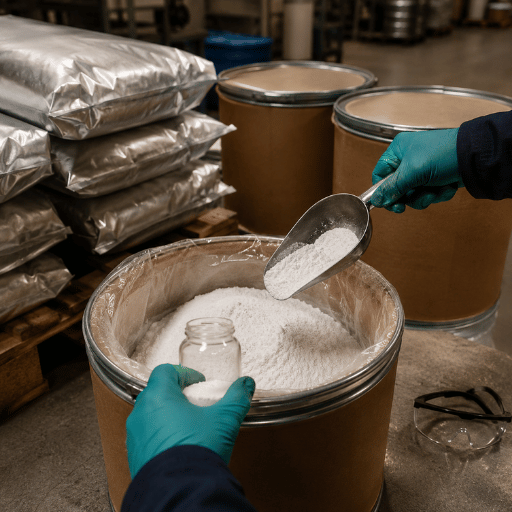
While benzophenone-3 is listed similarly on the cosmetics inventory of ingredients versus this industrial version, the difference in material for the compounder or coatings formulator of light yellow 98-99%+ powder, as expected to be listed for performance level use as the comparable CYASORB UV-9 and also being processed in melt/polymer stage instead of as a blend into an emulsion as in cosmetic formulation.
What does benzophenone-3 do in a formulation?
Protecting Polymers: A Guide to Benzophenone-3 As with any chemical, ensuring you source a benzophenone-3 grade that aligns with the regulatory and functional requirements for your target application is critical. As BP-3 has established industrial applications as a cost-effective, broad-band UV absorber in plastics and coatings for more than 30 years, many end-users consider it a staple. However, the landscape is changing-particularly with its increasing regulatory scrutiny in cosmetic applications. Here’s what you need to know if you’re an industrial formulator. In a polymer or coating, benzophenone-3 absorbs incoming UV (about 290-400 nm in the matrix) and converts it to heat before it can cleave polymer chains, slowing yellowing, chalking, and loss of mechanical strength. It doesn’t stop the oxidative chain reactions that follow once degradation starts-that’s the job of a HALS. The two are complementary: the absorber reduces the UV dose reaching the polymer; the HALS mops up the radicals that get through.
To hit a 0.3% BP-3 loading in a polyolefin film, you add 3 kg of benzophenone-3 per 1,000 kg of resin (0.3% of 1,000 kg = 3 kg). For outdoor service, run it with a HALS at roughly 0.2-0.5% rather than raising the absorber alone-doubling BP-3 to 0.6% buys far less added durability than adding a HALS, because the failure mode outdoors is radical-driven, not purely UV-dose-driven. Confirm thermal stability at your processing temperature and check dispersion, since BP-3 is a low-melting powder.
When sourcing, verify the certificate of analysis for assay/purity, appearance, melting point, and loss on drying, and confirm the grade is intended for your end-use. A cosmetic INCI grade and an industrial UV-absorber grade can share CAS 131-57-7 yet differ in specification and documentation. Wellt supplies benzophenone-3 within its UV absorber product range; for masterbatch carriers, see our note on UV masterbatch for plastics, and for the wider category, our guide to light stabilizers.
Industry Outlook: What’s Changing for Benzophenone-3 in 2026 and Beyond

The decisive shift is regulatory, not chemical: cosmetic oversight of benzophenone-3 is tightening while its industrial use stays open, and the two regimes are pulling apart. The UK restriction (SI 2025/901, 21 January 2026), the EU’s standing caps, and ECHA’s September 2025 endocrine-disruptor listing all target skin-contact products. None of them touch BP-3 used as a polymer or coating UV absorber-so a buyer’s first task in 2026 is to be clear about which regime their product sits in.
On the technology side, the cosmetic market now has a credible exit route.
Bemotrizinol (Parsol Shield) gained FDA approval in June 2026-the first new UV filter cleared in the US in about 25 years-and it is photostable and broad-band, which will accelerate reformulation away from oxybenzone in sunscreens. That bemotrizinol clearance came from the US FDA, the first new sunscreen-filter approval there in about 25 years. That migration is a cosmetic-sector story; it does not displace benzophenone-3 from cost-sensitive plastics and coatings, where its price and broad-band absorbance keep it relevant.
For context only, analyst estimates put the broader UV-absorber market near USD 925 million in 2023 growing to roughly USD 1.6 billion by 2033 (about 5.7% CAGR)-directional figures, not precise forecasts. The practical takeaway for 2026: if you sell cosmetics into the UK or EU, confirm BP-3 concentration compliance before the 21 January 2026 UK date and watch the bemotrizinol transition; if you buy BP-3 for industrial UV protection, document the end-use so cosmetic restrictions are not misapplied to your supply. The trap in 2026 is exactly that mismatch: a coatings producer does not have to drop benzophenone-3 because the UK capped it in sunscreen, yet some buyers reformulate anyway and pay for it. Wellt, REACH-registered with years of chemical-supply experience and in-house documentation, records grade and application on each order so the right regime is applied – confirm your spec before you change a working formulation.
Frequently Asked Questions
Is benzophenone-3 the same as oxybenzone?
View Answer
Is benzophenone-3 banned in Europe?
View Answer
Is benzophenone-3 safe for pregnant women and children?
View Answer
What is the maximum concentration of benzophenone-3 allowed in cosmetics?
View Answer
Is benzophenone-3 used in plastics and coatings?
View Answer
Is benzophenone a carcinogen?
View Answer
What is the CAS number of benzophenone-3?
View Answer
Wellt offers industrial-grade benzophenone-3 and full range of light-stabilizers and UV-absorbers with REACH registration documentation and certificate of analysis available on request.
About This Profile
We created this profile of benzophenone-3 in order to disentangle its role as a cosmetic ingredient and as an industrial UV absorber, because UV-9 buyers searching to stabilize plastics and coatings can be wrongly guided by recent attention to sunscreen safety that doesn’t apply to their situation. Data on dates and limit values is backed by primary EU, UK, and SCCS source verification from June 2026. Reviewed by the Wellt Chemicals technical team (Nanjing)
References & Sources
- 2-Hydroxy-4-methoxybenzophenone (CID 4632)PubChem, NIH
- Benzophenone-3 (BP-3; Oxybenzone)Biomonitoring California
- Benzophenone-3, a chemical UV-filter in cosmetics (Wnuk et al., 2022)PMC, NIH
- Benzophenone-3 SCCS Opinion (SCCS/1625/20)European Commission
- Commission Regulation (EU) 2022/1176EUR-Lex
- The Cosmetic Products (Restriction) Regulations, SI 2025/901legislation.gov.uk
- Review of the toxicological and human evidence (2023)Environment International
- OxybenzoneWikipedia (chemistry and absorption data)
- Impacts of Sunscreens on Coral ReefsInternational Coral Reef Initiative (ICRI)