---
description: What is AMP 95 (AMP-95)? Get the properties, uses in waterborne coatings, AMP-90 vs AMP-95, dosing math, and safety of aminomethyl propanol in one guide.
title: "[REFRESH] AMP-95: Complete Technical Guide"
image: https://welltchemicals.com/wp-content/uploads/2024/01/0-2.webp
---
[Skip to content](#content)
# \[REFRESH] AMP-95: Complete Technical Guide


[Home](https://welltchemicals.com/) » \[REFRESH] AMP-95: Complete Technical Guide
![\[REFRESH\] AMP-95: Complete Technical Guide](https://welltchemicals.com/wp-content/uploads/2024/01/0-2.webp)
- [January 19, 2024](https://welltchemicals.com/blog/2024/01/19/)
- 4:44 am
- [Jasonxue](https://welltchemicals.com/blog/author/jasonxue/)
If you googled AMP 95 (sometimes written AMP-95), you’re almost certainly looking for coatings chemical, not an amplifier for sound systems. AMP 95 is a 95% solution of 2-amino-2-methyl-1-propanol, a multi-tasking amino alcohol used by paint and adhesives formulators to neutralize acid functional resins, co-disperse pigments, and maintain steady pH levels. This is a quick guide that covers what it’s, its actual properties, what it’s used in, how much to use, and what it compares to ammonia and other AMPs.
### Quick Specs: AMP-95 (2-Amino-2-Methyl-1-Propanol)
| Chemical name | 2-Amino-2-methyl-1-propanol (AMP) |
| --- | --- |
| CAS / EINECS | 124-68-5 / 204-709-8 |
| Formula / Molar mass | C₄H₁₁NO / 89.14 g/mol |
| % active | 95% AMP + 5% water |
| Appearance | Colorless, low-viscosity liquid |
| pKa (25 °C) | \~9.8 |
| Typical dose | 0.1–0.3% on total formulation weight |
## What Is AMP-95?
**⚠️ Field note: grade mix-ups**
A common problem is treating AMP-95, AMP-90 and anhydrous AMP as interchangeable, which risks a batch running short on amine or turning solid in a 15 °C store. That happens because the grades differ in water content; AMP-95 is engineered to stay liquid at about 95% active amine. Coating production lines tend to standardize on the 95% grade, and Wellt ships certified batches with a certificate of analysis so buyers confirm assay first.
Marketed as a 95% solution with about 5% added water, AMP-95 is the trade name for 2-amino-2-methyl-1-propanol. it’s a colorless liquid, and belongs to a chemical classification known as [alkanolamine](https://en.wikipedia.org/wiki/Aminomethyl_propanol)s-which means a single molecule has an amine functional group (-NH2) and a hydroxyl functional group (-OH) attached to a carbon. This bifurcated molecule make for a weak base, ideal for maintaining stable pH levels, explaining its decades of use as a neutralizer for various water-based or aqueous systems.
Under CAS number 124-68-5, the molecule is listed at [PubChem CID 11807](https://pubchem.ncbi.nlm.nih.gov/compound/11807), registered by the U.S. National Institutes of Health. In the paint and coatings industry, this product, originally developed by ANGUS Chemical and now marketed as AMP-95 by Advancion (equivalent products from multiple sources exist), has become a workhorse. In the personal care and cosmetic industries, the INCI name for this substance, found on product labels, is Aminomethyl Propanol. A single chemical under a unique CAS # for paint, ink, glue, and beauty products-hence the sometimes scattered search results for “AMP-95.”
**💡 Why the 5% water matters**
When it’s in its neat, pure form, 2-amino-2-methyl-1-propanol is actually a solid at typical room temperatures, with melting points in the neighborhood of 30-31°C. Adding the 5% water in the commercial 95% version lowers the freezing point to around -2°C, ensuring it remains a easily handled liquid and prevents unwanted solidification when stored in cooler climates or environments.
## AMP-95 Properties & Specifications
**⚠️ Common pitfall: spec drift**
Teams sometimes fail to check water content batch to batch, and a 1–2% gap shifts buffering capacity and viscosity in a finished latex. Because AMP-95 is a 95% solution rather than a fixed compound, the fix is to confirm assay against the certificate of analysis before each production run. In-house QC at a certified supplier close that gap and is worth requesting up front.
Take the following numerical properties as approximate, representative values-these are a good starting point for initial compatibility checks and dose estimation but should never be relied upon without a specific certificate of analysis for a given product batch.
AMP-95 typical properties: 2-amino-2-methyl-1-propanol, MW 89.14 g/mol, boiling point 165 °C.
| Property | Value |
| --- | --- |
| Molar mass | 89.14 g/mol |
| Density | 0.934 g/cm³ |
| Melting point (pure AMP) | 30–31 °C |
| Boiling point | 165.5 °C |
| pKa (25 °C) | \~9.8 |
| Flash point (Tag closed cup) | 81 °C |
| Solubility in water | Miscible |
| GHS / NFPA | Warning; H315/H319/H412; NFPA 2-2-0 |
Property data: [PubChem CID 11807](https://pubchem.ncbi.nlm.nih.gov/compound/11807) and [ECHA InfoCard 100.004.282](https://echa.europa.eu/substance-information/-/substanceinfo/100.004.282).
## What Is AMP-95 Used For? The 5-Function Value Map
[\[REFRESH\] Irgafos 168: Uses, Benefits & SpecificationsWritten by Jasonxue
January 19, 2024![\[REFRESH\] Irgafos 168: Uses, Benefits \& Specifications](https://welltchemicals.com/wp-content/uploads/2024/01/0-1.webp)](https://welltchemicals.com/blog/exploring-the-uses-and-benefits-of-irgafos-168-a-comprehensive-guide/)
**💡 Why one additive beats three**
Buying a separate neutralizer, dispersant and flash-rust inhibitor raises cost and the risk of incompatibility between additives; that trade-off rarely pay off. It gets specified instead because one molecule is built around all three jobs at about 95% active amine, which is why formulators on industrial production lines use it to consolidate the bill of materials, and why [Wellt’s AMP-95 coating additive](https://welltchemicals.com/coating-additives/amp-95/) is stocked as a single multifunctional buy. Confirm tolerance to your resin system before scaling. This combined neutralizer-and-dispersant role is documented in [US Patent Application 20100041801A1](https://patents.google.com/patent/US20100041801A1/en).
### What is AMP-95 used for?
AMP-95 works as a multifunctional ingredient across water-based systems, serving as a pH neutralizer, a co-dispersing agent for pigments, a corrosion inhibitor, a pH buffer, and a compatibility enhancer. It’s favored over simpler neutralizing agents for its multi-talented approach: a single additive deliver multiple benefits, often eliminating the need for two or three distinct, single-use materials. Mapped below is the value proposition that product pages rarely explicitly state.
The 5-Function Value Map of AMP-95: five jobs one amino alcohol does in a water-based formulation.
| Function | Mechanism | Benefit |
| --- | --- | --- |
| pH neutralizer | Reacts with –COOH groups on acrylic/alkyd resins | Water-solubilizes the binder |
| Co-dispersant | Adsorbs on pigment (TiO₂, iron oxides), adds repulsion | Better color, less re-agglomeration |
| Corrosion / flash-rust inhibitor | Complexes metal ions; raises in-can pH reserve | Protects metal substrates and packaging |
| pH buffer | pKa \~9.8 resists drift in the 8–9.5 window | Stable viscosity and shelf life |
| Compatibilizer | Stabilizes emulsions and thickener systems | Fewer additives, lower cost |
## AMP-95 in Waterborne Coatings & Paints
**📐 The neutralization trade-off**
In practice, paint formulators struggle with a narrow window: too little amine and the latex can fail and coagulate below pH 8 within 24 hours; too much and you risk foam and a water-sensitive film. It holds that line because of its pKa near 9.8, so it’s engineered to buffer in the 8–9.5 band. On automotive and architectural production lines, 0.1–0.3% is the working dose, added after letdown.
### What is AMP-95 used for in paint?
In paint, AMP-95 neutralizes the carboxylic-acid groups built into acrylic and alkyd resins, which makes the binder water-dilutable and keeps the latex colloidally stable. Latex needs a pH near 8.0-9.5 to avoid coagulation, and a pKa near 9.8 holds that window better than ammonia. Because the same molecule also adsorbs onto pigment and colorant, one addition lifts hiding, gloss, and color while resisting yellowing — one reason AMP-95 sits in most [waterborne coating additive](https://welltchemicals.com/coating-additives/) line-ups.
Patent literature supports this function: applications such as US [Patent 20100041801A1 listing amine neutralizing agents for low-VOC paints](https://patents.google.com/patent/US20100041801A1/en) names 2-amino-2-methyl-1-propanol among the prominent alkanolamine neutralizers for waterborne coatings. Another published patent application notes AMP as “one of the most effective neutralizers in water borne acrylic formulations.”
## Beyond Coatings: Metalworking Fluids, Personal Care & Cleaners
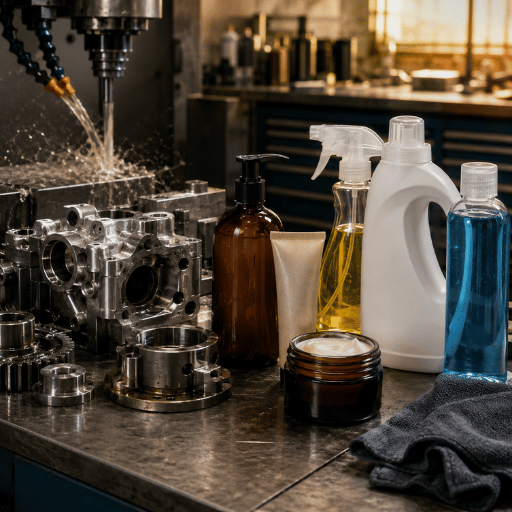
The same chemistry is useful, which is why “aminomethyl propanol” finds much more online tidbits that apply to the interests of personal care, and “AMP 95” is a stronger search term than just “AMP” because it’s also a common cosmetic science ingredient. As an organic compound it’s a buffer and dispersant but not a surfactant, so the chemistry application matrix map is below.
AMP-95 Application Matrix by industry category: where 2-amino-2-methyl-1-propanol is used and the primary role it plays in each category.
| Industry category | Primary role | Note |
| --- | --- | --- |
| Architectural coatings | Neutralizer + co-dispersant | Latex/acrylic interior & exterior paint |
| Industrial & automotive coatings | Corrosion inhibitor | Metal substrates, salt-spray resistance |
| Adhesives & sealants | Neutralizer | Water-based systems |
| Pigment dispersions & colorants | Co-dispersant | TiO₂, iron-oxide slurries |
| Inks & overprint varnish | pH buffer | Aqueous solution stability |
| Metalworking fluids | Alkalinity reserve | Corrosion control in coolants |
| Household & industrial cleaning | pH control | Hard-surface cleaners |
| Personal care | pH-adjusting ingredient | INCI Aminomethyl Propanol |
| Water treatment | pH / alkalinity | Aqueous dosing |
| Pharmaceutical / chemical synthesis | Building block | Buffer; precursor via chemical synthesis |
- Metalworking Fluids:alkalinity reserve and corrosion control in water-miscible coolants.
- Adhesives and Sealants:neutralization and stability in water-based adhesives and sealants.
- Personal Care:a pH-modifying additive in shampoos, conditioners, and hair sprays listing as Aminomethyl Propanol in the INCI.
- Household and industrial cleaning:pH control and soil suspension in hard-surface cleaners.
- Synthesis and Pharma:an industrial building block and pH-buffer; the molecule is prepared by hydrogenating 2-aminoisobutyric acid and it appears in the drug pamabrom (see [PubChem CID 11807](https://pubchem.ncbi.nlm.nih.gov/compound/11807)).
A common error is to consider AMP-95 as generic amine in these chemistries. It’s a buffer first: in cosmetics it’s dosed to reach a target pH rather than in fixed percentages, and concentration remains minimal to prevent irritation of the scalp and skin.
## AMP-95 vs Ammonia & Other Neutralizing Amines
[Discover the Essential Ultranox™ 626 Antioxidant: Your Complete 2024 GuideWritten by Jasonxue
January 19, 2024](https://welltchemicals.com/blog/ultranox-626/)
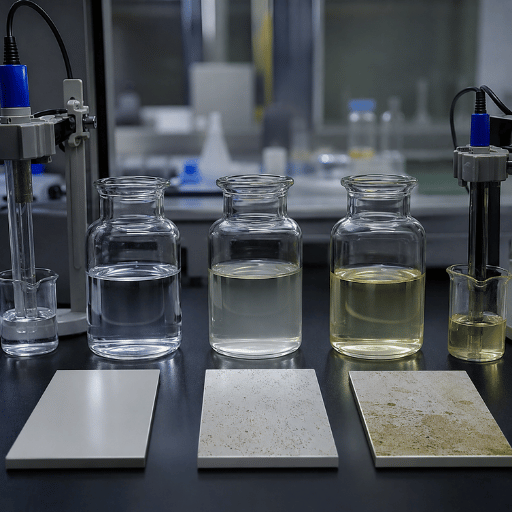
It’s tempting to see the molecule as just a more costly replacement for ammonia. That’s a misconception: ammonia only enables pH adjustment, whereas AMP-95 also disperses colorant and pigment particles and inhibits corrosion, so they aren’t a like comparison.
**✔ Where AMP-95 wins**
- Low odor (sterically hindered amine, low volatility)
- Resists yellowing vs ammonia/ethanolamines
- Adds dispersancy + corrosion control
- VOC-exempt by [U.S. EPA](https://www.epa.gov/ground-level-ozone-pollution/complete-list-voc-exemption-rules)
**⚠ Limitations**
- Corrosive to copper, brass, aluminum (use 316 stainless or lined tanks)
- Weak base – not suitable for strong, permanent neutralization( NaOH outperforms here)
- Higher unit cost than ammonia
> “AMP belongs to the family of sterically hindered amines, the hindered structure is what gives it low volatility compared with simple alkanolamines.”
>
> *F. Bougie & M. C. Iliuta, Université Laval, *Journal of Chemical & Engineering Data* (2012)*
## AMP-95 vs AMP-90 and Other AMP Grades
**📝 Names, grades & sourcing note**
You’ll see this additive written as AMP-95®, AMP-95™ or simply AMP-95; the lower-water grades carry names such as AMP-90™ and AMP-75™. All are the same colorless liquid of relatively low viscosity, valued for coating performance, UV and yellowing resistance, and regulatory compliance. When you compare suppliers, choose a partner whose documentation reflects real research and whose catalog lists related products. Wellt supplies AMP-95 and related coating additives for industrial buyers. Grade and VOC status are reflected in the [U.S. EPA VOC-exemption list](https://www.epa.gov/ground-level-ozone-pollution/complete-list-voc-exemption-rules).
**⚠️ Pick the grade, not the habit**
A frequent mistake is defaulting to whatever grade is in stock; that risks a 5–10% amine gap that quietly shifts your dose and pH. Because grades differ only in water content, the fix is to match active amine to your neutralization target rather than the label. Wellt supplies AMP-95, AMP-90 and anhydrous grades from certified production for industrial buyers who need consistent assay.
### What is the difference between AMP-90 and AMP-95?
What separates AMP-90 from AMP-95 is the volume of water, not the chemistry. Both compounds are identical (2-amino-2-methyl-1-propanol) both can be purchased as a wet (about 90% active, with 10% water) or dry (about 95% active, 5% water) form. That added water, which lowers the melting point and makes it easier to handle in a hot liquid, translates into the fact that there’s slightly less amine per unit weight, and dose accordingly. Use the selector given.
AMP Grade Selector: AMP-95, AMP-90, AMP-75 and anhydrous AMP differ only in water content and active amine.
| Grade | % active AMP | \~ Water | Pick it when |
| --- | --- | --- | --- |
| AMP-95 | \~95% | 5% | Default for coatings; most amine per kg, still pourable |
| AMP-90 | \~90% | 10% | Slightly easier cold handling; minor dose bump |
| AMP-75 | \~75% | 25% | Pre-diluted dosing convenience |
| AMP (anhydrous) | \~100% | 0% | Synthesis / gas treatment where water is unwanted (solid below \~31 °C) |
## How to Use AMP-95: Dosing & Neutralization
**📐 Where dosing goes wrong**
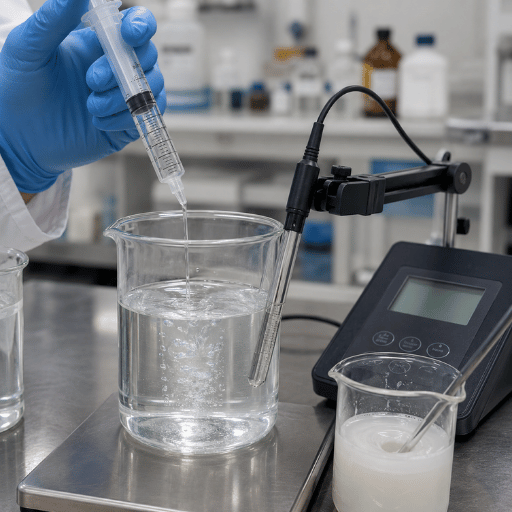
Two failures dominate: under-dosing lets pH drift acidic on storage, while over-dosing past 0.5% risks foam and amine bloom. Because AMP-95 buffers rather than acting as a strong base, titrate to an 8.5–9.5 target with a calibrated meter, add it diluted after letdown at 0.1–0.3%, and allow for amine loss in the film.
Neutralizer selection for low-VOC paints is discussed in [US Patent Application 20100041801A1](https://patents.google.com/patent/US20100041801A1/en).
Most latex paint formulas hit 0.1-0.3% AMP-95 on total formulation weight for pH control and co-dispersancy. But if you’re neutralizing a specific acid-functional resin, size the dose from its acid value rather than guessing.
**AMP-95 Neutralization Dose Estimator**
AMP-95 (g) = (AV × resin g × N × 89.14) ÷ (56100 × 0.95)
AV = resin acid value (mg KOH/g); N = fraction of acid groups you want neutralized; 89.14 = AMP molar mass; 56100 = mg KOH per mole; 0.95 = AMP-95 active fraction.
**Worked example:** a resin with AV = 50 mg KOH/g, 100 g of resin, neutralizing 80% (N = 0.8):
(50 × 100 × 0.8 × 89.14) ÷ (56100 × 0.95) = 356,560 ÷ 53,295 ≈ **6.7 g AMP-95**. Re-run it with your own acid value and batch size.
**📐 Engineering Note**
Add AMP-95 diluted and late (post-letdown) while stirring, and titrate to a target pH of 8.5-9.5 with a calibrated meter rather than test strips. Over-dosing past \~0.5% invites foam and amine bloom; under-dosing lets pH drift acidic on storage. Build in a small excess to cover amine loss during film formation.
## Safety, Handling & Regulatory Status
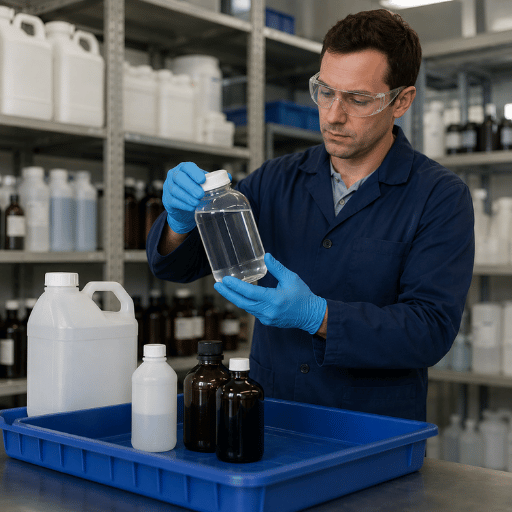
**⚠️ Handling mistakes that cost batches**
A costly mistake is pumping AMP-95 through copper or aluminum: it corrodes those metals above 40 °C or pH 10 and risks contaminating the batch. Root cause: its alkalinity, so the fix is 316 stainless or lined production equipment plus splash goggles and nitrile gloves. Because the amino alcohol is FDA-referenced for several food-contact uses and REACH-registered, documentation matters to industrial buyers.
It is alkaline and an irritant, not a high-acute-hazard chemical. Its GHS classification is Warning, with hazard statements H315 (skin irritation), H319 (eye irritation), and H412 (harmful to aquatic life with long-lasting effects); NFPA 704 rating is 2-2-0.
- Wear chemical splash goggles and nitrile gloves; the liquid irritates skin and eyes.
- Store sealed and away from strong acids and copper/aluminum equipment.
- For personal care, dose to a low target concentration to stay within cosmetic-use limits.
On the regulatory side, the U.S. EPA [granted AMP a VOC exemption on March 27, 2014](https://www.epa.gov/ground-level-ozone-pollution/complete-list-voc-exemption-rules). One caveat worth knowing: VOC-exempt is not the same as zero-VOC. AMP still has a small inherent VOC; it is exempt by regulation, and a 2025 [Federal Register amendment to aerosol-coating VOC standards](https://www.federalregister.gov/documents/2025/01/17/2025-00436/national-volatile-organic-compound-emission-standards-for-aerosol-coatings-amendments) still references it explicitly. It is REACH-registered (ECHA InfoCard 100.004.282). Always confirm the current SDS for your region before use.
## Industry Outlook: Low-VOC Coatings Keep AMP-95 Relevant
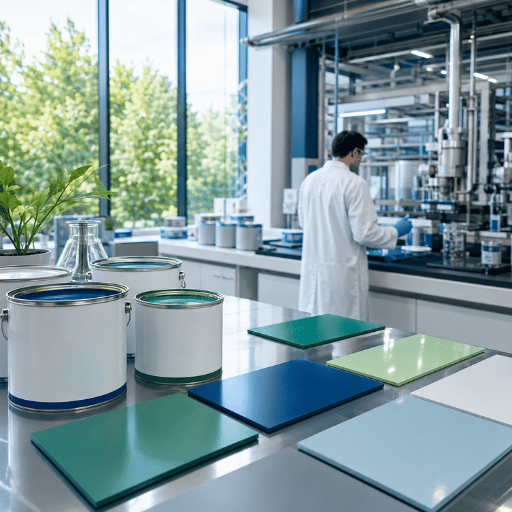
**💡 What buyers should plan for**
Buyers face a single-source supply gap risk when VOC rules tighten and demand for compliant amines climbs, the 2025 [Federal Register aerosol amendment](https://www.federalregister.gov/documents/2025/01/17/2025-00436/national-volatile-organic-compound-emission-standards-for-aerosol-coatings-amendments) is one example. Because the driver is regulatory, not cyclical, the sensible move is to qualify a second AMP-95 source. Production planners in the architectural and industrial coatings segments should treat multifunctional amines as strategic and lock in certified supply early.
Regulation, not hype, is the load-bearing trend for AMP-95: tightening VOC limits in the U.S. and EU keep pushing architectural and industrial coatings from solvent-borne toward waterborne, and water-based systems need efficient, low-odor neutralizing amines. The 2025 Federal Register aerosol-coatings amendment is one more turn of that ratchet. For a buyer, the practical implication through 2026 is to treat multifunctionality as a selection criterion – an additive that neutralizes, disperses, and inhibits corrosion can consolidate a bill of materials – and to qualify a second AMP-95 source so a single supplier outage doesn’t stall production. Market trackers put waterborne coatings in the mid-tens of billions of dollars with low-to-mid single-digit annual growth, but treat those figures as directional background; the durable signal is the regulation driving the switch.
## Frequently Asked Questions
### Q: What is AMP-95 used for?
View Answer
AMP-95 is used as a multifunctional additive in water-based formulations. It neutralizes acid-functional resins, acts as a co-dispersant for pigments, inhibits corrosion and flash rust, and buffers pH. You will find it in waterborne paints and coatings, metalworking fluids, household and industrial cleaners, adhesives, and — as Aminomethyl Propanol — in personal care products. Its appeal is doing several jobs at once: one addition can replace a separate neutralizer, dispersant, and flash-rust inhibitor in low-VOC, water-based work.
### Q: What is AMP-95 used for in paint?
View Answer
In paint, AMP-95 neutralizes the carboxylic-acid groups on acrylic and alkyd resins so the binder becomes water-dilutable and the latex stays stable around pH 8–9.5. Because the same molecule also adsorbs onto pigment, it doubles as a co-dispersant, improving hiding, gloss, and color while resisting yellowing better than ammonia.
### Q: What is the difference between AMP-90 and AMP-95?
View Answer
They are the same molecule with different water content. AMP-95 is about 95% active 2-amino-2-methyl-1-propanol with \~5% water; AMP-90 is about 90% active with \~10% water. AMP-90 handles a little more easily in the cold, but you dose slightly more of it to reach the same neutralization.
### Q: What is the CAS number of AMP-95?
View Answer
Its CAS number is 124-68-5, identifying 2-amino-2-methyl-1-propanol, and its EINECS (EC) number is 204-709-8. The PubChem CID is 11807. These identifiers stay the same across grades such as AMP-90 and AMP-75, which differ only in water content, not chemistry.
### Q: Is AMP-95 corrosive?
View Answer
It is alkaline and an eye- and skin-irritant under GHS (H315/H319), and it corrodes copper, brass, and aluminum above roughly 40 °C or pH 10. Use 316 stainless or lined equipment, wear splash goggles and nitrile gloves, and keep it clear of strong acids.
### Q: Where can I buy AMP-95?
View Answer
AMP-95 is sold by specialty chemical suppliers in drums and IBCs. Wellt Chemicals supplies AMP-95 as a coating additive with samples and a certificate of analysis on request — verify batch water content and assay before scaling up.
### About This AMP-95 Guide
We’ve pulled information for this primer from public technical and regulatory resources – PubChem, ECHA, U.S. EPA VOC rules, patent applications, peer-reviewed amine chemistry literature, and cross-checked it with amp-95 product information – because of all the repetitive questions we were getting from formulators regarding dosage, as well as the AMP-90 and AMP-95 difference. Technically Reviewed by the Nanjing Wellt Chemicals Team.
**Need AMP-95 for your formulation?**
Wellt Chemicals:AMP-95 from China with Samples, TDS/SDS, drum or IBC quantities.
[View AMP-95 & Request a Sample →](https://welltchemicals.com/coating-additives/amp-95/)
### Related Articles
- [Coating Additives, full product range](https://welltchemicals.com/coating-additives/)
- [The Ultimate Guide to Coating Additives](https://welltchemicals.com/blog/the-ultimate-guide-to-coating-additives-2024/)
- [Surfynol 104, wetting & defoaming additive](https://welltchemicals.com/coating-additives/surfynol-104/)
- [Ethyl Cellulose for coatings](https://welltchemicals.com/coating-additives/ethyl-cellulose/)
### References & Sources
1. [2-Amino-2-methyl-1-propanol, CID 11807](https://pubchem.ncbi.nlm.nih.gov/compound/11807)PubChem, U.S. National Institutes of Health
2. [Complete List of VOC Exemption Rules](https://www.epa.gov/ground-level-ozone-pollution/complete-list-voc-exemption-rules)U.S. Environmental Protection Agency
3. [National VOC Emission Standards for Aerosol Coatings, 2025 Amendments](https://www.federalregister.gov/documents/2025/01/17/2025-00436/national-volatile-organic-compound-emission-standards-for-aerosol-coatings-amendments)U.S. Federal Register
4. [Substance InfoCard 100.004.282](https://echa.europa.eu/substance-information/-/substanceinfo/100.004.282)European Chemicals Agency (ECHA)
5. [Aminomethyl propanol](https://en.wikipedia.org/wiki/Aminomethyl_propanol)Wikipedia
6. [Amine neutralizing agents for low-VOC organic paints (US20100041801A1)](https://patents.google.com/patent/US20100041801A1/en)Google Patents
7. [Sterically Hindered Amine-Based Absorbents (J. Chem. Eng. Data, 2012)](https://doi.org/10.1021/je200731v)Bougie & Iliuta
Search
Products From Wellt
- [Anti-reversing Agent](https://welltchemicals.com/anti-reversing-agent/)
- [Antioxidant TBHQ](https://welltchemicals.com/antioxidant-tbhq/)
- [Coating Additives](https://welltchemicals.com/coating-additives/)
- [Cross-linking Agent](https://welltchemicals.com/cross-linking-agent/)
- [Light Stabilizers](https://welltchemicals.com/light-stabilizers/)
- [Optical Brightener](https://welltchemicals.com/optical-brightener/)
- [Phenolic Resin](https://welltchemicals.com/phenolic-resin/)
- [Plastic Antioxidants](https://welltchemicals.com/plastic-antioxidants/)
- [Plasticizer](https://welltchemicals.com/plasticizer/)
- [Rubber Accelerators](https://welltchemicals.com/rubber-accelerators/)
- [Rubber Antioxidants](https://welltchemicals.com/rubber-antioxidants/)
- [Accelerator Cbs](https://welltchemicals.com/rubber-accelerators/sulfenamide-accelerator/accelerator-cbs/)
- [Accelerator Mbt](https://welltchemicals.com/rubber-accelerators/thiazole-accelerator/accelerator-mbt/)
- [Accelerator Mbts](https://welltchemicals.com/rubber-accelerators/thiazole-accelerator/accelerator-mbts/)
- [Antioxidant DLTDP](https://welltchemicals.com/plastic-antioxidants/sulfur-ester-antioxidant/antioxidant-dltdp/)
Hamburger Toggle Menu
Recently Posted
[](https://welltchemicals.com/blog/ethyl-cellulose-food-grade-applications/)
[Food-Grade Ethyl Cellulose: Applications, Grades & Safety in the Food Industry](https://welltchemicals.com/blog/ethyl-cellulose-food-grade-applications/)
nome June 30, 2026
[](https://welltchemicals.com/blog/uv-absorbers-for-plastics/)
[UV Absorber & Light Stabilizer for Plastic & Polymer](https://welltchemicals.com/blog/uv-absorbers-for-plastics/)
Adria October 17, 2025
[](https://welltchemicals.com/blog/ight-stabilizer-types/)
[UV Stabilizers: Types for Plastics and Polymer Performance](https://welltchemicals.com/blog/ight-stabilizer-types/)
Adria October 16, 2025
[](https://welltchemicals.com/blog/masterbatch-uv/)
[UV Stabilizer Masterbatch: UV Protection for Plastics](https://welltchemicals.com/blog/masterbatch-uv/)
Adria October 15, 2025
[](https://welltchemicals.com/blog/what-are-the-types-of-synthetic-antioxidant/)
[Natural and Synthetic Antioxidant Types & Benefits](https://welltchemicals.com/blog/what-are-the-types-of-synthetic-antioxidant/)
Adria October 14, 2025
[](https://welltchemicals.com/blog/uv-light-stabilizers-additives/)
[UV Stabilizer Additive for Polymers & Plastics: UV Light Protection](https://welltchemicals.com/blog/uv-light-stabilizers-additives/)
Adria October 13, 2025
##### Blog Categories
Contact Wellt
Contact Form Demo
Your Name \*
Email
Phone/WhatsApp
Your Message
Submit Form
[PrevPreviousGuide to Antioxidant TBHQ: Everything You Need to Know](https://welltchemicals.com/blog/guide-to-antioxidant-tbhq-everything-you-need-to-know/)
[NextZDMA Crosslinking Agent in Rubber: Enhancing Composite PropertiesNext](https://welltchemicals.com/blog/zdma-crosslinking-agent-in-rubber-enhancing-composite-properties/)
×
## Table of Contents
Table of Contents
Scroll to Top
Get in touch with WELLT company
Contact Form Demo
Your Name \*
Email
Phone/WhatsApp
Your Message
Submit Form
```json
{"@context":"https:\/\/schema.org","@graph":[{"@type":"Article","@id":"https:\/\/welltchemicals.com\/blog\/the-complete-guide-to-amp-95-in-2024\/#article","isPartOf":{"@id":"https:\/\/welltchemicals.com\/blog\/the-complete-guide-to-amp-95-in-2024\/"},"author":{"name":"Jasonxue","@id":"https:\/\/welltchemicals.com\/#\/schema\/person\/6a3251bf40c3b0416aac42bf51ca56f6"},"headline":"[REFRESH] AMP-95: Complete Technical Guide","datePublished":"2024-01-19T04:44:38+00:00","dateModified":"2026-06-17T05:38:15+00:00","mainEntityOfPage":{"@id":"https:\/\/welltchemicals.com\/blog\/the-complete-guide-to-amp-95-in-2024\/"},"wordCount":2970,"commentCount":0,"publisher":{"@id":"https:\/\/welltchemicals.com\/#organization"},"image":{"@id":"https:\/\/welltchemicals.com\/blog\/the-complete-guide-to-amp-95-in-2024\/#primaryimage"},"thumbnailUrl":"https:\/\/welltchemicals.com\/wp-content\/uploads\/2024\/01\/0-2.webp","articleSection":["Chemical Blog"],"inLanguage":"en-US","potentialAction":[{"@type":"CommentAction","name":"Comment","target":["https:\/\/welltchemicals.com\/blog\/the-complete-guide-to-amp-95-in-2024\/#respond"]}]},{"@type":"WebPage","@id":"https:\/\/welltchemicals.com\/blog\/the-complete-guide-to-amp-95-in-2024\/","url":"https:\/\/welltchemicals.com\/blog\/the-complete-guide-to-amp-95-in-2024\/","name":"[REFRESH] AMP-95: Complete Technical Guide - Wellt","isPartOf":{"@id":"https:\/\/welltchemicals.com\/#website"},"primaryImageOfPage":{"@id":"https:\/\/welltchemicals.com\/blog\/the-complete-guide-to-amp-95-in-2024\/#primaryimage"},"image":{"@id":"https:\/\/welltchemicals.com\/blog\/the-complete-guide-to-amp-95-in-2024\/#primaryimage"},"thumbnailUrl":"https:\/\/welltchemicals.com\/wp-content\/uploads\/2024\/01\/0-2.webp","datePublished":"2024-01-19T04:44:38+00:00","dateModified":"2026-06-17T05:38:15+00:00","description":"What is AMP 95 (AMP-95)? Get the properties, uses in waterborne coatings, AMP-90 vs AMP-95, dosing math, and safety of aminomethyl propanol in one guide.","breadcrumb":{"@id":"https:\/\/welltchemicals.com\/blog\/the-complete-guide-to-amp-95-in-2024\/#breadcrumb"},"inLanguage":"en-US","potentialAction":[{"@type":"ReadAction","target":["https:\/\/welltchemicals.com\/blog\/the-complete-guide-to-amp-95-in-2024\/"]}]},{"@type":"ImageObject","inLanguage":"en-US","@id":"https:\/\/welltchemicals.com\/blog\/the-complete-guide-to-amp-95-in-2024\/#primaryimage","url":"https:\/\/welltchemicals.com\/wp-content\/uploads\/2024\/01\/0-2.webp","contentUrl":"https:\/\/welltchemicals.com\/wp-content\/uploads\/2024\/01\/0-2.webp","width":1200,"height":800,"caption":"[REFRESH] AMP-95: Complete Technical Guide"},{"@type":"BreadcrumbList","@id":"https:\/\/welltchemicals.com\/blog\/the-complete-guide-to-amp-95-in-2024\/#breadcrumb","itemListElement":[{"@type":"ListItem","position":1,"name":"Home","item":"https:\/\/welltchemicals.com\/"},{"@type":"ListItem","position":2,"name":"[REFRESH] AMP-95: Complete Technical Guide"}]},{"@type":"WebSite","@id":"https:\/\/welltchemicals.com\/#website","url":"https:\/\/welltchemicals.com\/","name":"Wellt","description":"China's top Antioxidants & Light Stabilizers Supplier","publisher":{"@id":"https:\/\/welltchemicals.com\/#organization"},"potentialAction":[{"@type":"SearchAction","target":{"@type":"EntryPoint","urlTemplate":"https:\/\/welltchemicals.com\/?s={search_term_string}"},"query-input":{"@type":"PropertyValueSpecification","valueRequired":true,"valueName":"search_term_string"}}],"inLanguage":"en-US"},{"@type":"Organization","@id":"https:\/\/welltchemicals.com\/#organization","name":"Wellt","url":"https:\/\/welltchemicals.com\/","logo":{"@type":"ImageObject","inLanguage":"en-US","@id":"https:\/\/welltchemicals.com\/#\/schema\/logo\/image\/","url":"https:\/\/welltchemicals.com\/wp-content\/uploads\/2024\/01\/南京welltt.webp","contentUrl":"https:\/\/welltchemicals.com\/wp-content\/uploads\/2024\/01\/南京welltt.webp","width":512,"height":512,"caption":"Wellt"},"image":{"@id":"https:\/\/welltchemicals.com\/#\/schema\/logo\/image\/"}},{"@type":"Person","@id":"https:\/\/welltchemicals.com\/#\/schema\/person\/6a3251bf40c3b0416aac42bf51ca56f6","name":"Jasonxue","image":{"@type":"ImageObject","inLanguage":"en-US","@id":"https:\/\/secure.gravatar.com\/avatar\/8a9bdb892d57e70c0de6902869137644fd47304144ff8732d63e81ee5b572348?s=96&d=mm&r=g","url":"https:\/\/secure.gravatar.com\/avatar\/8a9bdb892d57e70c0de6902869137644fd47304144ff8732d63e81ee5b572348?s=96&d=mm&r=g","contentUrl":"https:\/\/secure.gravatar.com\/avatar\/8a9bdb892d57e70c0de6902869137644fd47304144ff8732d63e81ee5b572348?s=96&d=mm&r=g","caption":"Jasonxue"},"description":"I write about specialty ingredients and how their intended uses differ across applications. My articles introduce a coating additive and ascorbyl palmitate. I aim to explain product terms and the questions behind them, while leaving specific formulation, compliance, or health judgments to the relevant technical documentation and qualified professionals.","sameAs":["https:\/\/welltchemicals.com"],"url":"https:\/\/welltchemicals.com\/blog\/author\/jasonxue\/"}]}
{"@context":"https://schema.org","@type":"FAQPage","mainEntity":[{"@type":"Question","name":"What is AMP-95 used for?","acceptedAnswer":{"@type":"Answer","text":"AMP-95 is used as a multifunctional additive in water-based formulations. It neutralizes acid-functional resins, acts as a co-dispersant for pigments, inhibits corrosion and flash rust, and buffers pH. You will find it in waterborne paints and coatings, metalworking fluids, household and industrial cleaners, adhesives, and — as Aminomethyl Propanol — in personal care products. Its appeal is doing several jobs at once: one addition can replace a separate neutralizer, dispersant, and flash-rust inhibitor in low-VOC, water-based work."}},{"@type":"Question","name":"What is AMP-95 used for in paint?","acceptedAnswer":{"@type":"Answer","text":"In paint, AMP-95 neutralizes the carboxylic-acid groups on acrylic and alkyd resins so the binder becomes water-dilutable and the latex stays stable around pH 8–9.5. Because the same molecule also adsorbs onto pigment, it doubles as a co-dispersant, improving hiding, gloss, and color while resisting yellowing better than ammonia."}},{"@type":"Question","name":"What is the difference between AMP-90 and AMP-95?","acceptedAnswer":{"@type":"Answer","text":"They are the same molecule with different water content. AMP-95 is about 95% active 2-amino-2-methyl-1-propanol with ~5% water; AMP-90 is about 90% active with ~10% water. AMP-90 handles a little more easily in the cold, but you dose slightly more of it to reach the same neutralization."}},{"@type":"Question","name":"What is the CAS number of AMP-95?","acceptedAnswer":{"@type":"Answer","text":"Its CAS number is 124-68-5, identifying 2-amino-2-methyl-1-propanol, and its EINECS (EC) number is 204-709-8. The PubChem CID is 11807. These identifiers stay the same across grades such as AMP-90 and AMP-75, which differ only in water content, not chemistry."}},{"@type":"Question","name":"Is AMP-95 corrosive?","acceptedAnswer":{"@type":"Answer","text":"It is alkaline and an eye- and skin-irritant under GHS (H315/H319), and it corrodes copper, brass, and aluminum above roughly 40 °C or pH 10. Use 316 stainless or lined equipment, wear splash goggles and nitrile gloves, and keep it clear of strong acids."}},{"@type":"Question","name":"Where can I buy AMP-95?","acceptedAnswer":{"@type":"Answer","text":"AMP-95 is sold by specialty chemical suppliers in drums and IBCs. Wellt Chemicals supplies AMP-95 as a coating additive with samples and a certificate of analysis on request — verify batch water content and assay before scaling up."}}]}
```