
---
description: Discover the myriad Irgafos 168 (CAS 31570-04-4) is a phosphite secondary antioxidant. Compare its properties, polymer uses, dosage, Irganox 1010 synergy, and food-contact safety.` (158 chars)uses and benefits of Irgafos 168 in this comprehensive guide. Uncover the secrets behind this versatile substance.
title: [REFRESH] Irgafos 168: Uses, Benefits &amp; Specifications
image: https://welltchemicals.com/wp-content/uploads/2024/01/0-1.png
---


[Skip to content](#content) 

# \[REFRESH\] Irgafos 168: Uses, Benefits & Specifications

![](https://welltchemicals.com/wp-content/uploads/2024/01/dc74faa7-shape-1-1.png) 

![](https://welltchemicals.com/wp-content/uploads/2024/01/97080b15-pattern-dot.webp) 

[Home](https://welltchemicals.com/) » \[REFRESH\] Irgafos 168: Uses, Benefits & Specifications

![\[REFRESH\] Irgafos 168: Uses, Benefits & Specifications](https://welltchemicals.com/wp-content/uploads/2024/01/0-1.webp) 

* [ January 4, 2024 ](https://welltchemicals.com/blog/2024/01/04/)
* 8:36 am
* [  Jasonxue ](https://welltchemicals.com/blog/author/Jasonxue/)

**Irgafos 168** (CAS 31570-04-4) is a phosphite secondary antioxidant, a processing stabilizer that protects molten plastic from heat damage during extrusion, molding, and recycling. Sold as Antioxidant 168 and under names such as Alkanox 240, it pairs with a primary phenolic antioxidant like Irganox 1010 to keep polyolefins from yellowing and losing strength. This guide covers its chemical identity, how it works, dosage by polymer, food-contact compliance, and how to verify quality before you buy.

### Quick Specs, Irgafos 168

| CAS number           | 31570-04-4                                              |
| -------------------- | ------------------------------------------------------- |
| Chemical name        | Tris(2,4-di-tert-butylphenyl) phosphite                 |
| Formula / MW         | C42H63O3P / 646.9 g/mol                                 |
| Type                 | Secondary antioxidant (phosphite processing stabilizer) |
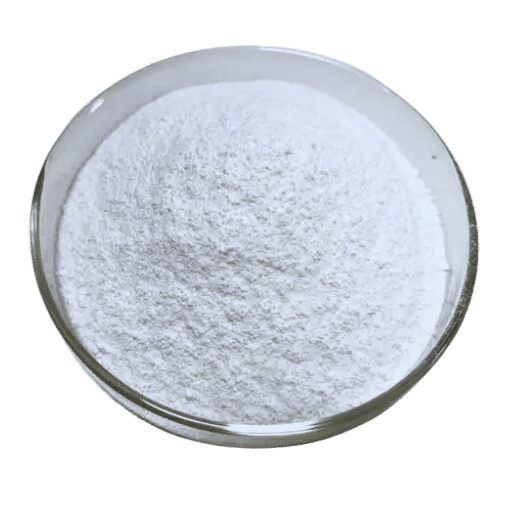
| Appearance           | White free-flowing powder or granular (FF) form         |
| Melting range        | 181–186 °C                                              |
| Density (20 °C)      | 1.03 g/cm³                                              |
| Typical dosage       | 0.05–0.2% in polyolefins; 0.5–1% in high-bake coatings  |
| Common equivalents   | Antioxidant 168, Alkanox 240, Songnox 1680, Wellnox 168 |
| FDA food-contact ADI | 1 mg/kg bw/day (20 ppm)                                 |

## What Is Irgafos 168?

![What Is Irgafos 168?](https://welltchemicals.com/wp-content/uploads/2024/01/1-254.webp)

Among phosphite stabilizers, Irgafos® 168 is the most commonly used secondary antioxidant in the plastics industry. Marketed as Irgafos 168 by BASF, it’s chemically tris(2,4-di-tert-butylphenyl) phosphite, a trivalent-phosphorus compound the producer describes as a “hydrolytically stable phosphite processing stabilizer.” It does its work during the melt-processing window rather than in the finished part, which is what makes it a secondary, not a primary, antioxidant.

Used as an AO (antioxidant) for decades, it belongs to the class of _secondary_ antioxidants: additives that don’t stop oxidation on their own but instead protect the polymer, and the primary antioxidant, during the high-heat processing steps of compounding, extrusion, and molding.

You will see the same molecule sold under several names, which causes confusion at the buying stage. “Antioxidant 168,” “AO-168,” “Alkanox 240,” and “Songnox 1680” all refer to CAS 31570-04-4\. The name “Irganox 168” is a frequent misspelling, the BASF trade name for this phosphite is _Irgafos_ 168, while the Irganox family is the company’s primary phenolic antioxidants. Getting that name wrong is a real sourcing risk, not a typo: a buyer who orders “Irganox 168” expecting a phosphite can be shipped a phenolic instead, because the two families do opposite jobs, and the mistake usually surfaces only after the melt yellows on the production line at 230 °C. Wellt’s in-house QC cross-checks every inquiry against CAS 31570-04-4, the ≥99% assay, and the FDA food-contact status before quoting, whichever trade name a customer uses. If you are sourcing, treat all of these as the same active and compare on assay and grade rather than brand. Wellt supplies it as [Irgafos 168 (Antioxidant 168)](https://welltchemicals.com/plastic-antioxidants/phosphite-ester/irgafos-168/) within its [phosphite ester](https://welltchemicals.com/plastic-antioxidants/phosphite-ester/) range.

## Chemical Identity & Key Properties

![Chemical Identity & Key Properties](https://welltchemicals.com/wp-content/uploads/2024/01/2-100.webp)

Data below is drawn from the BASF technical data sheet and cross-checked against the PubChem database and peer-reviewed literature; spectral identification (FTIR and 31P-NMR) is what confirms the structure on a Certificate of Analysis. These are the numbers a buyer need to read a Certificate of Analysis (COA) or fill a material spec sheet.

__Irgafos 168 (CAS 31570-04-4) physical and chemical properties, molecular weight 646.9 g/mol.__
| Property                 | Value                                                    |
| ------------------------ | -------------------------------------------------------- |
| CAS number               | 31570-04-4                                               |
| Molecular formula        | C42H63O3P                                                |
| Molecular weight         | 646.9 g/mol                                              |
| Phosphorus content       | \~4.8% (theoretical, one P per molecule)                 |
| Appearance               | White, free-flowing powder; granular “FF” form available |
| Melting range            | 181–186 °C                                               |
| Density (20 °C)          | 1.03 g/cm³                                               |
| Bulk density (powder)    | 480–570 g/L                                              |
| Water solubility (20 °C) | <0.1% (soluble in xylene \~20%)                          |
| Key traits               | Hydrolytically stable; low volatility                    |

Source: BASF Irgafos 168 technical data sheet; PubChem CID 91601.

Two properties explain why this particular phosphite dominates the market. First, it resists hydrolysis: many cheaper phosphites react with moisture and break down in the bag or the feed throat, forming acids and gels. Irgafos 168 holds up, which is why it ships and stores reliably. Second, it has low volatility, so it stays in the melt at processing temperatures instead of fuming off. Together these traits let it deliver, in BASF’s words, “high performance at low concentration levels.”

## How Irgafos 168 Works: The Secondary Antioxidant Mechanism

![How Irgafos 168 Works: The Secondary Antioxidant Mechanism](https://welltchemicals.com/wp-content/uploads/2024/01/3-79.png)

To understand where Irgafos 168 fits, start with what goes wrong. When a polymer is heated during processing, autoxidation initiated by oxygen, shear, and metal catalyst residues kicks off. The chain reaction produces _hydroperoxides_ (ROOH) inside the melt. Left alone, those hydroperoxides split into new radicals that cut polymer chains (chain scission) or link them (crosslinking) — the result is lower molecular weight, lost strength, and yellowing.

A melt-flow-rate shift of 20–50% is common in unstabilized polypropylene after a single extrusion pass at 230 °C, because the autoxidation chain keeps cutting molecules, which is why processors treat this as a real production problem and a warranty risk, not a cosmetic one.

[Discover the Essential Ultranox™ 626 Antioxidant: Your Complete 2024 GuideWritten by Jasonxue January 4, 2024![Discover the Essential Ultranox™ 626 Antioxidant: Your Complete 2024 Guide](https://welltchemicals.com/wp-content/uploads/2024/01/1-16.png)](https://welltchemicals.com/blog/ultranox-626/)

A primary antioxidant such as [Irganox 1010](https://welltchemicals.com/plastic-antioxidants/hindered-phenol/irganox-1010/ "Irganox 1010") mops up the radicals. But it can’t neutralize the hydroperoxides themselves. That’s the secondary antioxidant’s job. Trivalent phosphorus in Irgafos 168 reacts during processing with hydroperoxides, converting each one to a harmless alcohol (ROH) while the phosphite itself is oxidized to a phosphate, a reaction that help reduce degradation of the polymer. It works inside polymers preventing process-induced degradation, and in doing so it removes the fuel before it can ignite a new radical cycle. When you combine the phosphite with the phenolic, the phosphite is effectively extending the performance of primary antioxidants, which is why the two are almost always used together. The spent phosphite also leaves behind well-characterized degradation species that we cover in a companion guide.

**📐 Engineering Note** 

Mechanistically, the reaction is a phosphorus oxidation state change: P(III) → P(V). One mole of Irgafos 168 decomposes hydroperoxides stoichiometrically, so its protective capacity is consumed during processing. This is why a phosphite mainly guards the _melt-processing_ window, while the phenolic carries long-term thermal protection in service. For a deeper look at what the spent phosphite turn into, see our companion article on [Irgafos 168 degradation and migration](https://welltchemicals.com/blog/what-are-the-degradants-of-irgafos-168/).

## Irgafos 168 vs Irganox 1010: Why You Need Both (The 1:2 Rule)

![Irgafos 168 vs Irganox 1010: Why You Need Both \(The 1:2 Rule\)](https://welltchemicals.com/wp-content/uploads/2024/01/4-55.png)

This is the single most common question buyers ask, and the answer drive most antioxidant formulations. Irganox 1010 and Irgafos 168 aren’t competitors, they do different jobs at different stages. Treating them as interchangeable is the classic formulation mistake: dose only the phenolic and the melt is left unprotected during extrusion; dose only the phosphite and the finished part can fail early in service, because neither one covers the other’s window. In practice Wellt ships the two together as the pre-blended 1:2 B215 package, so a compounder dosing a typical 0.15% total (per the dosage table below) gets both windows covered without weighing two powders.

__Irgafos 168 vs Irganox 1010: secondary phosphite and primary phenolic antioxidants do complementary jobs.__
| Feature                | Irganox 1010 (primary)                                                                                | Irgafos 168 (secondary)              |
| ---------------------- | ----------------------------------------------------------------------------------------------------- | ------------------------------------ |
| Chemical class         | [Hindered phenol](https://welltchemicals.com/plastic-antioxidants/hindered-phenol/ "Hindered phenol") | Phosphite                            |
| What it does           | Scavenges peroxy radicals (chain-breaking)                                                            | Decomposes hydroperoxides            |
| Main protection window | Long-term thermal aging in service                                                                    | Melt processing (extrusion, molding) |
| Effect on color        | Protects against long-term yellowing                                                                  | Prevents process discoloration       |
| CAS number             | 6683-19-8                                                                                             | 31570-04-4                           |

**The 1:2 Rule.** As a default starting point, the industry uses two parts of the phosphite for every one part of the phenolic. That ratio is exactly what the ready-made blend [Irganox B215](https://welltchemicals.com/plastic-antioxidants/composite-antioxidant/irganox-b215/) contains: one part [Irganox 1010](https://welltchemicals.com/plastic-antioxidants/hindered-phenol/irganox-1010/) to two parts Irgafos 168\. If you would rather dose a single pre-mixed pellet than weigh two powders, buy the blend; if you want to tune the ratio for a specific resin, dose them separately.

__Common phenolic-to-phosphite blend ratios (Irganox 1010 : Irgafos 168).__
| Blend               | Ratio (1010 : 168) | Typical use                            |
| ------------------- | ------------------ | -------------------------------------- |
| Irganox B225        | 1 : 1              | Balanced processing + long-term        |
| Irganox B215        | 1 : 2              | Processing-heavy polyolefins (default) |
| Irganox B900 / B921 | 1 : 4              | High-shear or recycled streams         |

### What is the difference between Irgafos 168 and Irganox 1010?

Irganox 1010 is a primary (chain-breaking) hindered-phenol antioxidant that protects the finished part over its service life; Irgafos 168 is a secondary phosphite that protects the melt during processing by decomposing hydroperoxides. Using only the phenolic leaves the melt under-protected during extrusion; using only the phosphite leave the part exposed in service. A combination, typically the 1:2 blend, covers both windows, which is why almost every polyolefin antioxidant package contains a phenolic and a phosphite.

## Applications by Polymer: PP, PE, ABS, PC & More

![Applications by Polymer: PP, PE, ABS, PC & More](https://welltchemicals.com/wp-content/uploads/2024/01/5-34.png)

You’ll find Irgafos 168 in nearly all melt-processed thermoplastics, but the reason it’s added changes with the resin. Polyolefins are the largest market because they oxidize readily at processing temperatures, a use documented in the [patent literature on phosphite additives in polyolefins](https://patents.google.com/patent/WO2006124018A1/en).

__Irgafos 168 applications by polymer type and material class, with the reason it is added for each.__
| Polymer type / material class               | Why Irgafos 168 is added                                                                  |
| ------------------------------------------- | ----------------------------------------------------------------------------------------- |
| Polypropylene (PP)                          | Protects molecular weight and color during the most oxidation-prone polyolefin processing |
| Polyethylene (HDPE, LLDPE)                  | Film and pipe processing stability; paired with a phenolic for long-term aging            |
| ABS & styrenics                             | Color retention through multiple heat histories                                           |
| Polycarbonate (PC)                          | Processing stability and clarity at high melt temperatures                                |
| Polyamide (PA)                              | Melt protection, used with a compatible phenolic                                          |
| Polybutene and ethylene vinyl acetate (EVA) | Thermo-oxidative protection during compounding and fabrication                            |
| Elastomers, adhesives & waxes               | Stabilizes color and viscosity during hot-melt compounding                                |
| Films & fibers (BOPP, tapes, raffia)        | Guards against scission and dust during high-shear extrusion and drawing                  |
| Powder & coil coatings (high-bake)          | Prevents discoloration in direct gas-fired ovens, especially white and pastel tones       |

### What plastics is Irgafos 168 used in?

Irgafos 168 is used mainly in polyolefins, polypropylene, HDPE, and LLDPE, plus polycarbonate, polyamide, ABS and other styrenics, EVA, polybutene, elastomers, adhesives, and waxes. It’s also used in high-bake powder and coil coatings. In every case it’s a processing-stage stabilizer, so it appears wherever a polymer is melt-processed, extruded, molded, or reprocessed during recycling.

## Recommended Dosage, Grades & Handling

![Recommended Dosage, Grades & Handling](https://welltchemicals.com/wp-content/uploads/2024/01/6-29.png)

There’s no single dose. The right level depend on the resin, how many heat cycles it sees, and whether a primary antioxidant is present. The four application bands below give practical starting points; confirm with your own processing trials.

### The 4-Tier Dosage Matrix

__Irgafos 168 dosage starting points by application (confirm with processing trials).__
| Application                        | Irgafos 168             | Pair with                             |
| ---------------------------------- | ----------------------- | ------------------------------------- |
| General PP / PE processing         | 0.05–0.10%              | Irganox 1010 at \~half the dose (1:2) |
| Demanding or recycled polyolefin   | 0.10–0.20%              | Phenolic; consider 1:4 for high shear |
| Engineering plastics (PC, PA, ABS) | 0.05–0.15%              | Compatible phenolic                   |
| High-bake powder / coil coatings   | 0.5–1.0% (total solids) | Optional phenolic                     |

💡 **Worked example**

For a 1,000 kg batch of PP compound dosed at 0.10% Irgafos 168, you add 1.0 kg of the phosphite. To follow the 1:2 rule, add Irganox 1010 at 0.05% — that’s 0.5 kg, giving one part phenolic to two parts phosphite. Scale the percentages, not the kilograms, when your batch size changes.

[\[REFRESH\] Irganox 1010 Antioxidant: Complete GuideWritten by Jasonxue January 4, 2024![[REFRESH] Irganox 1010 Antioxidant: Complete Guide](https://welltchemicals.com/wp-content/uploads/2024/01/0-3.webp)](https://welltchemicals.com/blog/antioxidant-irganox-1010-guide-2024/)

**Grades and handling.** Commercially, the product ships as a standard powder or as a low-dust granular “FF” grade; the granular form feed more cleanly and reduces airborne dust on the compounding line. Store it sealed in its original packaging between 5 °C and 40 °C. Because it resists hydrolysis better than most phosphites, it tolerates normal warehouse conditions, but prolonged exposure to heat and humidity should still be avoided. A patented dust-free, improved-flow form is the origin of the granular grade most plants prefer.

## Food-Contact Compliance & Safety

![Food-Contact Compliance & Safety](https://welltchemicals.com/wp-content/uploads/2024/01/7-27.png)

Because Irgafos 168 is so widely used in food packaging, the hazard profile behind its food-contact use has been studied closely. In its [updated safety assessment](https://www.fda.gov/science-research/fda-science-forum/updated-safety-assessment-tris24-di-tert-butylphenyl-phosphite-irgafos-168-used-food-contact), the U.S. Food and Drug Administration reviewed the dietary exposure and oral toxicity of Irgafos 168 (referred to as I-168) and its main degradant. The exposure assessment included both I-168 and its degradants, and its conclusions on the use of I-168 underpin the headline numbers compliance teams cite.

**FDA food-contact assessment — key figures** 
* Acceptable daily intake (ADI): **1 mg/kg body weight/day (20 ppm)**
* Combined cumulative estimated daily intake (CEDI): **0.09 mg/kg bw/day** (about 1.8 ppb for a 60 kg adult)
* Basis: NOEL of 2,000 ppm from a two-year chronic toxicity/carcinogenicity study in rats, with a safety factor of 100
* Potential concern for neurotoxicity from the degradant I-168ate: **not supported** (no effect in a hen study; steric hindrance blocks the acetylcholinesterase active site)

Source: FDA Center for Food Safety and Applied Nutrition; peer-reviewed in 2023.

Since the CEDI (0.09 mg/kg bw/day) sits well below the ADI (1 mg/kg bw/day), the FDA concluded there is no safety concern at current authorized use levels. In the European Union, Irgafos 168 appears on the Regulation (EU) No 10/2011 Union list of substances authorized for plastic food-contact articles and materials, with the list reviewed and updated periodically through 2025–2026\. This long food-contact regulatory history means most buyers can document compliance quickly, but always confirm the current entry and any specific migration limit for your application.

> “There is no safety concern for its current authorized use levels, and the degradants of I-168 do not appear to pose a safety concern for neurotoxicity.”
> 
> Markley et al., FDA Center for Food Safety and Applied Nutrition (2021)

### Is Irgafos 168 safe for food contact?

Yes, within authorized use levels. The FDA’s assessment found the cumulative estimated daily intake (0.09 mg/kg bw/day) is roughly ten times below the acceptable daily intake of 1 mg/kg bw/day, and it dismissed the neurotoxicity concern raised about the phosphate degradant. Irgafos 168 is also listed under EU Regulation 10/2011 for plastic food-contact materials. For regulated applications, request food-contact documentation and any migration-limit data from your supplier.

## A Limitation Worth Knowing: Migration

![A Limitation Worth Knowing: Migration](https://welltchemicals.com/wp-content/uploads/2024/01/8-24.png)

One counterintuitive finding is worth flagging, because it surprises buyers who assume a stabilizer stays locked in the part. Peer-reviewed migration studies show that Irgafos 168 actually migrates out of polyolefins _more_ than Irganox 1010 does, and the release rate climbs at higher temperatures. In fact, the additive is so common that analysts find it as a background contaminant in laboratories, which complicates leaching measurements.

**✔ Strengths** 
* Excellent hydrolytic stability vs other phosphites
* Low volatility, effective at low dose
* Strong processing color protection
* Established FDA and EU food-contact status

**⚠️ Limitations** 
* Not a standalone, needs a primary phenolic
* Migrates more than the phenolic at high temperature
* Protective capacity is consumed during processing
* Over-dosing raises migration and cost, not protection

## How to Source & Verify Irgafos 168

![How to Source & Verify Irgafos 168](https://welltchemicals.com/wp-content/uploads/2024/01/9-22.png)

Because the same molecule is sold by many producers at very different quality levels, the COA, not the brand, tells you what you’re buying. Use this checklist when you request a quote and again when the material arrives.

* ✔ Assay (purity) stated as ≥99% on the COA
* ✔ Phosphorus content near the \~4.8% theoretical value
* ✔ Melting range within 181–186 °C
* ✔ Grade confirmed, powder vs low-dust granular (FF) — to match your feeder
* ✔ CAS 31570-04-4 and equivalence to Irganox 168 / Alkanox 240 stated explicitly
* ✔ Food-contact documentation (FDA / EU 10/2011) and an animal- and ethanol-free statement where relevant

If you’re comparing offers, ask each supplier for the same COA fields and a small sample for a processing trial before you commit to volume. Wellt sources [Irgafos 168 (Antioxidant 168)](https://welltchemicals.com/plastic-antioxidants/phosphite-ester/irgafos-168/) with quality documentation and can quote alongside the matching [Irganox 1010](https://welltchemicals.com/plastic-antioxidants/hindered-phenol/irganox-1010/) or the pre-mixed B215 blend. For background on the wider additive family, see our [guide to plastic antioxidants](https://welltchemicals.com/blog/the-ultimate-guide-to-plastic-antioxidants-in-2024/).

[Request an Irgafos 168 quote & COA →](https://welltchemicals.com/plastic-antioxidants/phosphite-ester/irgafos-168/)

## Supply & Regulatory Outlook

![Supply & Regulatory Outlook](https://welltchemicals.com/wp-content/uploads/2024/01/10-17.webp)

Two forces shape sourcing decisions for Irgafos 168 buyers right now, and neither is the headline market-size figure. First, the FDA’s reaffirmation that the additive raises no safety concern at authorized food-contact levels removes a question mark that once slowed adoption in food packaging, it gives compounders firmer footing to specify it. Second, recycling is pushing demand for processing stabilizers: every additional heat cycle a recycled polyolefin sees consumes more antioxidant, so reprocessed streams need more phosphite, not less. For a production line compounding 30% recycled polypropylene at 2 ton/h, that can mean stepping Irgafos 168 from 0.10% to 0.18% just to hold melt-flow stability, because the recyclate arrives part-spent, a real cost-and-supply risk, and a stockout problem if a single source falls short. Wellt keeps two qualified sources on the shelf for exactly this reason.

On the supply side, capacity for phosphite antioxidants has grown among Chinese producers, which means more qualified Antioxidant 168 equivalents are available at competitive prices. For background, market trackers put the phosphite auxiliary antioxidant segment in the low single-digit billions with mid-single-digit annual growth, but those figures vary by source and should be read as directional context only. The practical takeaway for buyers: qualify two or three sources on COA quality now, so recycled-content and food-contact projects aren’t held up by a single-supplier bottleneck later.

## Frequently Asked Questions

### Q: What is the CAS number of Irgafos 168?

View Answer 

The CAS number of Irgafos 168 is 31570-04-4\. Its chemical name is tris(2,4-di-tert-butylphenyl) phosphite, the molecular formula is C42H63O3P, and the molecular weight is 646.9 g/mol. The same CAS number applies to equivalents sold as Antioxidant 168, Alkanox 240, and Songnox 1680, so you can use it to confirm you are comparing identical active material across suppliers.

### Q: What is Irgafos 168 used for?

View Answer 

Irgafos 168 is used as a secondary antioxidant, or processing stabilizer, in melt-processed plastics. It decomposes hydroperoxides formed during extrusion and molding, preventing chain scission, molecular-weight change, and discoloration. It is most common in polyolefins such as polypropylene, HDPE, and LLDPE, and is also used in polycarbonate, polyamide, ABS, adhesives, and high-bake coatings, almost always alongside a primary phenolic antioxidant.

### Q: Is Irgafos 168 the same as Irganox 168?

View Answer 

They refer to the same compound, but “Irganox 168” is a common misspelling. BASF’s trade name for this phosphite is Irgafos 168, while the Irganox family is its range of primary phenolic antioxidants such as Irganox 1010\. Both names point to CAS 31570-04-4, so if a datasheet says “Irganox 168” it almost certainly means Irgafos 168 — confirm by the CAS number.

### Q: What is the recommended dosage of Irgafos 168?

View Answer 

Typical use is 0.05–0.2% in polyolefin processing and 0.5–1% in high-bake coatings, usually paired with a primary antioxidant. Confirm the exact level with processing trials.

### Q: Is Irgafos 168 hydrolytically stable?

View Answer 

Yes. Hydrolytic stability is its main advantage over cheaper phosphites, which can react with moisture and break down before use.

### Q: What is the difference between Irgafos 168 and Irganox B215?

View Answer 

Irgafos 168 is a single phosphite antioxidant. Irganox B215 is a ready-made blend of one part Irganox 1010 and two parts Irgafos 168, so it delivers both primary and secondary protection in one pre-mixed product.

### References & Sources

1. [Updated Safety Assessment of Tris(2,4-di-tert-butylphenyl) Phosphite (Irgafos 168) Used in Food Contact Applications](https://www.fda.gov/science-research/fda-science-forum/updated-safety-assessment-tris24-di-tert-butylphenyl-phosphite-irgafos-168-used-food-contact)U.S. Food and Drug Administration (CFSAN)
2. [Safety assessment for Tris(2,4-di-tert-butylphenyl) phosphite (Irgafos 168) in food contact applications](https://pubmed.ncbi.nlm.nih.gov/37336387/)PubMed / NCBI (2023)
3. [Migration of antioxidant additives from various polyolefinic plastics](https://pubmed.ncbi.nlm.nih.gov/12711176/)PubMed / NCBI
4. [Tris(2,4-di-tert-butylphenyl) phosphite, CID 91601](https://pubchem.ncbi.nlm.nih.gov/compound/Tris%5F2%5F4-di-tert-butylphenyl%5F-phosphite)PubChem (NIH)
5. [Phosphite additives in polyolefins (WO2006124018A1)](https://patents.google.com/patent/WO2006124018A1/en)Google Patents
6. [Plastic material food contact, Union list (Regulation EU 10/2011)](https://echa.europa.eu/de/plastic-material-food-contact)European Chemicals Agency

### Related Articles

* [Irgafos 168 Degradation & Migration, what the spent phosphite turns into](https://welltchemicals.com/blog/what-are-the-degradants-of-irgafos-168/)
* [Irganox B215, the ready-made 1:2 antioxidant blend](https://welltchemicals.com/plastic-antioxidants/composite-antioxidant/irganox-b215/)
* [Antioxidant 626, an alternative phosphite processing stabilizer](https://welltchemicals.com/plastic-antioxidants/phosphite-ester/antioxidant-626/)
* [Types of synthetic antioxidants, primary vs secondary](https://welltchemicals.com/blog/what-are-the-types-of-synthetic-antioxidant/)

### About This Guide

Wellt sources Irgafos 168, Irganox 1010, and the B215 blend for compounders and masterbatch producers, so the dosage, grade (powder vs granular FF), and COA checkpoints in this guide reflect the questions buyers actually ask us. Property figures are taken from the BASF technical data sheet and PubChem; the food-contact numbers are from the FDA assessment. Reviewed by the Nanjing Wellt Chemicals technical team.

Search 

Products From Wellt

* [Anti-reversing Agent](https://welltchemicals.com/anti-reversing-agent/)
* [Antioxidant TBHQ](https://welltchemicals.com/antioxidant-tbhq/)
* [Coating Additives](https://welltchemicals.com/coating-additives/)
* [Cross-linking Agent](https://welltchemicals.com/cross-linking-agent/)
* [Light Stabilizers](https://welltchemicals.com/light-stabilizers/)
* [Optical Brightener](https://welltchemicals.com/optical-brightener/)
* [Phenolic Resin](https://welltchemicals.com/phenolic-resin/)
* [Plastic Antioxidants](https://welltchemicals.com/plastic-antioxidants/)
* [Plasticizer](https://welltchemicals.com/plasticizer/)
* [Rubber Accelerators](https://welltchemicals.com/rubber-accelerators/)
* [Rubber Antioxidants](https://welltchemicals.com/rubber-antioxidants/)
* [Accelerator Cbs](https://welltchemicals.com/rubber-accelerators/sulfenamide-accelerator/accelerator-cbs/)
* [Accelerator Mbt](https://welltchemicals.com/rubber-accelerators/thiazole-accelerator/accelerator-mbt/)
* [Accelerator Mbts](https://welltchemicals.com/rubber-accelerators/thiazole-accelerator/accelerator-mbts/)
* [Antioxidant DLTDP](https://welltchemicals.com/plastic-antioxidants/sulfur-ester-antioxidant/antioxidant-dltdp/)
Hamburger Toggle Menu 

Recently Posted

[ ![Ethyl Cellulose Food Grade: 6 Key Applications (2026)](https://welltchemicals.com/wp-content/uploads/2026/06/ethyl-cellulose-food-grade-applications-featured.webp) ](https://welltchemicals.com/blog/ethyl-cellulose-food-grade-applications/) 

[ Food-Grade Ethyl Cellulose: Applications, Grades & Safety in the Food Industry ](https://welltchemicals.com/blog/ethyl-cellulose-food-grade-applications/) 

 nome  June 30, 2026 

[ ![Importance of UV Protection in the Plastic Industry](https://welltchemicals.com/wp-content/uploads/2025/10/Importance-of-UV-Protection-in-the-Plastic-Industry.webp) ](https://welltchemicals.com/blog/uv-absorbers-for-plastics/) 

[ UV Absorber & Light Stabilizer for Plastic & Polymer ](https://welltchemicals.com/blog/uv-absorbers-for-plastics/) 

 Adria  October 17, 2025 

[ ![Types of UV Stabilizers](https://welltchemicals.com/wp-content/uploads/2025/10/Types-of-UV-Stabilizers.webp) ](https://welltchemicals.com/blog/ight-stabilizer-types/) 

[ UV Stabilizers: Types for Plastics and Polymer Performance ](https://welltchemicals.com/blog/ight-stabilizer-types/) 

 Adria  October 16, 2025 

[ ![Types of UV Stabilizers in Masterbatch Solutions](https://welltchemicals.com/wp-content/uploads/2025/10/Types-of-UV-Stabilizers-in-Masterbatch-Solutions.webp) ](https://welltchemicals.com/blog/masterbatch-uv/) 

[ UV Stabilizer Masterbatch: UV Protection for Plastics ](https://welltchemicals.com/blog/masterbatch-uv/) 

 Adria  October 15, 2025 

[ ![Introduction to Antioxidants](https://welltchemicals.com/wp-content/uploads/2025/10/Introduction-to-Antioxidants-1.webp) ](https://welltchemicals.com/blog/what-are-the-types-of-synthetic-antioxidant/) 

[ Natural and Synthetic Antioxidant Types & Benefits ](https://welltchemicals.com/blog/what-are-the-types-of-synthetic-antioxidant/) 

 Adria  October 14, 2025 

[ ![Benefits of UV Light Stabilizers](https://welltchemicals.com/wp-content/uploads/2025/10/Benefits-of-UV-Light-Stabilizers.webp) ](https://welltchemicals.com/blog/uv-light-stabilizers-additives/) 

[ UV Stabilizer Additive for Polymers & Plastics: UV Light Protection ](https://welltchemicals.com/blog/uv-light-stabilizers-additives/) 

 Adria  October 13, 2025 

##### Blog Categories

Contact Wellt

Contact Form Demo

Your Name \*

Email

Phone/WhatsApp

Your Message

Submit Form

[NextDiscover the Essential Ultranox™ 626 Antioxidant: Your Complete 2024 GuideNext](https://welltchemicals.com/blog/ultranox-626/) 

× 

## Table of Contents

Table of Contents 

Scroll to Top 

Get in touch with WELLT company

Contact Form Demo

Your Name \*

Email

Phone/WhatsApp

Your Message

Submit Form

```json
{"@context":"https:\/\/schema.org","@graph":[{"@type":"Article","@id":"https:\/\/welltchemicals.com\/blog\/exploring-the-uses-and-benefits-of-irgafos-168-a-comprehensive-guide\/#article","isPartOf":{"@id":"https:\/\/welltchemicals.com\/blog\/exploring-the-uses-and-benefits-of-irgafos-168-a-comprehensive-guide\/"},"author":{"name":"Jasonxue","@id":"https:\/\/welltchemicals.com\/#\/schema\/person\/6a3251bf40c3b0416aac42bf51ca56f6"},"headline":"[REFRESH] Irgafos 168: Uses, Benefits &#038; Specifications","datePublished":"2024-01-04T08:36:43+00:00","dateModified":"2026-06-16T02:42:16+00:00","mainEntityOfPage":{"@id":"https:\/\/welltchemicals.com\/blog\/exploring-the-uses-and-benefits-of-irgafos-168-a-comprehensive-guide\/"},"wordCount":3086,"commentCount":0,"publisher":{"@id":"https:\/\/welltchemicals.com\/#organization"},"image":{"@id":"https:\/\/welltchemicals.com\/blog\/exploring-the-uses-and-benefits-of-irgafos-168-a-comprehensive-guide\/#primaryimage"},"thumbnailUrl":"https:\/\/welltchemicals.com\/wp-content\/uploads\/2024\/01\/0-1.webp","articleSection":["Chemical Blog"],"inLanguage":"en-US","potentialAction":[{"@type":"CommentAction","name":"Comment","target":["https:\/\/welltchemicals.com\/blog\/exploring-the-uses-and-benefits-of-irgafos-168-a-comprehensive-guide\/#respond"]}]},{"@type":"WebPage","@id":"https:\/\/welltchemicals.com\/blog\/exploring-the-uses-and-benefits-of-irgafos-168-a-comprehensive-guide\/","url":"https:\/\/welltchemicals.com\/blog\/exploring-the-uses-and-benefits-of-irgafos-168-a-comprehensive-guide\/","name":"[REFRESH] Irgafos 168: Uses, Benefits & Specifications - Wellt","isPartOf":{"@id":"https:\/\/welltchemicals.com\/#website"},"primaryImageOfPage":{"@id":"https:\/\/welltchemicals.com\/blog\/exploring-the-uses-and-benefits-of-irgafos-168-a-comprehensive-guide\/#primaryimage"},"image":{"@id":"https:\/\/welltchemicals.com\/blog\/exploring-the-uses-and-benefits-of-irgafos-168-a-comprehensive-guide\/#primaryimage"},"thumbnailUrl":"https:\/\/welltchemicals.com\/wp-content\/uploads\/2024\/01\/0-1.webp","datePublished":"2024-01-04T08:36:43+00:00","dateModified":"2026-06-16T02:42:16+00:00","description":"Discover the myriad Irgafos 168 (CAS 31570-04-4) is a phosphite secondary antioxidant. Compare its properties, polymer uses, dosage, Irganox 1010 synergy, and food-contact safety.` (158 chars)uses and benefits of Irgafos 168 in this comprehensive guide. Uncover the secrets behind this versatile substance.","breadcrumb":{"@id":"https:\/\/welltchemicals.com\/blog\/exploring-the-uses-and-benefits-of-irgafos-168-a-comprehensive-guide\/#breadcrumb"},"inLanguage":"en-US","potentialAction":[{"@type":"ReadAction","target":["https:\/\/welltchemicals.com\/blog\/exploring-the-uses-and-benefits-of-irgafos-168-a-comprehensive-guide\/"]}]},{"@type":"ImageObject","inLanguage":"en-US","@id":"https:\/\/welltchemicals.com\/blog\/exploring-the-uses-and-benefits-of-irgafos-168-a-comprehensive-guide\/#primaryimage","url":"https:\/\/welltchemicals.com\/wp-content\/uploads\/2024\/01\/0-1.webp","contentUrl":"https:\/\/welltchemicals.com\/wp-content\/uploads\/2024\/01\/0-1.webp","width":1200,"height":800,"caption":"[REFRESH] Irgafos 168: Uses, Benefits & Specifications"},{"@type":"BreadcrumbList","@id":"https:\/\/welltchemicals.com\/blog\/exploring-the-uses-and-benefits-of-irgafos-168-a-comprehensive-guide\/#breadcrumb","itemListElement":[{"@type":"ListItem","position":1,"name":"Home","item":"https:\/\/welltchemicals.com\/"},{"@type":"ListItem","position":2,"name":"[REFRESH] Irgafos 168: Uses, Benefits &#038; Specifications"}]},{"@type":"WebSite","@id":"https:\/\/welltchemicals.com\/#website","url":"https:\/\/welltchemicals.com\/","name":"Wellt","description":"China&#039;s top Antioxidants &amp; Light Stabilizers Supplier","publisher":{"@id":"https:\/\/welltchemicals.com\/#organization"},"potentialAction":[{"@type":"SearchAction","target":{"@type":"EntryPoint","urlTemplate":"https:\/\/welltchemicals.com\/?s={search_term_string}"},"query-input":{"@type":"PropertyValueSpecification","valueRequired":true,"valueName":"search_term_string"}}],"inLanguage":"en-US"},{"@type":"Organization","@id":"https:\/\/welltchemicals.com\/#organization","name":"Wellt","url":"https:\/\/welltchemicals.com\/","logo":{"@type":"ImageObject","inLanguage":"en-US","@id":"https:\/\/welltchemicals.com\/#\/schema\/logo\/image\/","url":"https:\/\/welltchemicals.com\/wp-content\/uploads\/2024\/01\/南京welltt.webp","contentUrl":"https:\/\/welltchemicals.com\/wp-content\/uploads\/2024\/01\/南京welltt.webp","width":512,"height":512,"caption":"Wellt"},"image":{"@id":"https:\/\/welltchemicals.com\/#\/schema\/logo\/image\/"}},{"@type":"Person","@id":"https:\/\/welltchemicals.com\/#\/schema\/person\/6a3251bf40c3b0416aac42bf51ca56f6","name":"Jasonxue","image":{"@type":"ImageObject","inLanguage":"en-US","@id":"https:\/\/secure.gravatar.com\/avatar\/8a9bdb892d57e70c0de6902869137644fd47304144ff8732d63e81ee5b572348?s=96&d=mm&r=g","url":"https:\/\/secure.gravatar.com\/avatar\/8a9bdb892d57e70c0de6902869137644fd47304144ff8732d63e81ee5b572348?s=96&d=mm&r=g","contentUrl":"https:\/\/secure.gravatar.com\/avatar\/8a9bdb892d57e70c0de6902869137644fd47304144ff8732d63e81ee5b572348?s=96&d=mm&r=g","caption":"Jasonxue"},"sameAs":["https:\/\/welltchemicals.com"],"url":"https:\/\/welltchemicals.com\/blog\/author\/Jasonxue\/"}]}
{"@context":"https://schema.org","@type":"FAQPage","mainEntity":[{"@type":"Question","name":"What is the CAS number of Irgafos 168?","acceptedAnswer":{"@type":"Answer","text":"The CAS number of Irgafos 168 is 31570-04-4. Its chemical name is tris(2,4-di-tert-butylphenyl) phosphite, the molecular formula is C42H63O3P, and the molecular weight is 646.9 g/mol. The same CAS number applies to equivalents sold as Antioxidant 168, Alkanox 240, and Songnox 1680, so you can use it to confirm you are comparing identical active material across suppliers."}},{"@type":"Question","name":"What is Irgafos 168 used for?","acceptedAnswer":{"@type":"Answer","text":"Irgafos 168 is used as a secondary antioxidant, or processing stabilizer, in melt-processed plastics. It decomposes hydroperoxides formed during extrusion and molding, preventing chain scission, molecular-weight change, and discoloration. It is most common in polyolefins such as polypropylene, HDPE, and LLDPE, and is also used in polycarbonate, polyamide, ABS, adhesives, and high-bake coatings, almost always alongside a primary phenolic antioxidant."}},{"@type":"Question","name":"Is Irgafos 168 the same as Irganox 168?","acceptedAnswer":{"@type":"Answer","text":"They refer to the same compound, but \"Irganox 168\" is a common misspelling. BASF's trade name for this phosphite is Irgafos 168, while the Irganox family is its range of primary phenolic antioxidants such as Irganox 1010. Both names point to CAS 31570-04-4, so if a datasheet says \"Irganox 168\" it almost certainly means Irgafos 168 — confirm by the CAS number."}},{"@type":"Question","name":"What is the recommended dosage of Irgafos 168?","acceptedAnswer":{"@type":"Answer","text":"Typical use is 0.05–0.2% in polyolefin processing and 0.5–1% in high-bake coatings, usually paired with a primary antioxidant. Confirm the exact level with processing trials."}},{"@type":"Question","name":"Is Irgafos 168 hydrolytically stable?","acceptedAnswer":{"@type":"Answer","text":"Yes. Hydrolytic stability is its main advantage over cheaper phosphites, which can react with moisture and break down before use."}},{"@type":"Question","name":"What is the difference between Irgafos 168 and Irganox B215?","acceptedAnswer":{"@type":"Answer","text":"Irgafos 168 is a single phosphite antioxidant. Irganox B215 is a ready-made blend of one part Irganox 1010 and two parts Irgafos 168, so it delivers both primary and secondary protection in one pre-mixed product."}}]}
```