---
description: "Discover Lowinox CPL: its chemical properties, applications, and industry uses. Dive into a technical and professional guide filled with key insights and recommendations."
title: 6PPD
image: https://welltchemicals.com/wp-content/uploads/2024/01/2-5.jpg
---
[Skip to content](#content)
# 6PPD
## Sourcing 6PPD from China - Professional Assistance
With our extensive network and expertise, we can provide you with high-quality 6PPD at competitive prices. Our team of professionals will handle all the logistics and ensure smooth and efficient delivery to your location. Trust Wellt for all your chemical sourcing needs. Contact us today for a consultation, and let us help you obtain the 6PPD you require.
[Home](https://welltchemicals.com/) » [Rubber Antioxidants](https://welltchemicals.com/rubber-antioxidants/) » 6PPD
-  ## Introducing 6PPD from Wellt
Our product brand: Wellnox 6PPD
- **6PPD** is the latest innovation from the chemical company Wellt. It offers exceptional benefits for a variety of applications.
- The compound exhibits dynamic and intermittent ozone resistance, making it suitable for industries experiencing fluctuating ozone levels.
- 6PPD acts as a stabilizer for SBR and inhibits monomer polymerization.
- It provides flex fatigue and oxidation resistance at low concentrations, allowing for optimal results using minimal amounts.
- 6PPD appears as dark purple pastilles, adding visual interest to chemical supplies.
- Wellt packages and transports 6PPD in 20/25kg paper bags with PE inlay for maximum protection. Each pallet contains 600kg.
- The company’s expertise and experience make it a trusted source for innovative chemical solutions like 6PPD.
[enquiry now](#elementor-action%3Aaction%3Dpopup%3Aopen%26settings%3DeyJpZCI6IjY5OCIsInRvZ2dsZSI6ZmFsc2V9)

*6PPD*
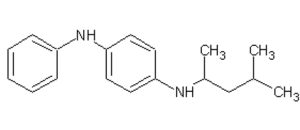
*6PPD Structure*
-  ## 6PPD Technical Data
Our product brand: Wellnox 6PPD
### CAS NO.: 793-24-8
CHEMICAL NAME: N(1,3-Dimethylbutyl)-N’-Phenyl-P-Phenylenediamine.
## 6PPD Specifications
| Appearance: | | Dark Purple Pastilles |
| --- | --- | --- |
| Purity (GC) | (%) min. | 96 |
| Melting Point | (℃) min. | 45 |
| Solidifying Point | (℃) min. | 45.5 |
| Heating Loss | (%) max. | 0.5 |
| Ash | (%) max. | 0.15 |
| TYPICAL PROPERTIES | | |
| Density at 20℃ | Kg/m3 | 986—1000 |
| PACKAGING: | | 20/25kg paper bag with PE Inlay |
| | | Pallet: 600Kg |
- [](https://welltchemicals.com/wp-content/uploads/2024/01/TDSWellnox-6PPD.pdf) ## [6PPD Technical Data Sheet PDF](https://welltchemicals.com/wp-content/uploads/2024/01/TDSWellnox-6PPD.pdf)
Click to download accessories for our products
## 6PPD For Sale
6PPD, a high-performing antioxidant, is renowned for enhancing product stability and longevity. This sale presents an opportunity to incorporate these reliable additives into your production process, fostering improved efficiency and product lifespan.
[6PPD Sale](https://welltchemicals.com/wp-content/uploads/2024/01/1-4.jpg) [6PPD Sale](https://welltchemicals.com/wp-content/uploads/2024/01/3-5.jpg) [6PPD Sale](https://welltchemicals.com/wp-content/uploads/2024/01/5-4.jpg)
## Welcome to Our 6PPD Factory!
[factory display -1](https://welltchemicals.com/wp-content/uploads/2024/01/2-3.webp) [factory display -2](https://welltchemicals.com/wp-content/uploads/2024/01/2-10.webp) [factory display -3](https://welltchemicals.com/wp-content/uploads/2024/01/3-4.webp) [factory display -4](https://welltchemicals.com/wp-content/uploads/2024/01/4-4.webp) [factory display -5](https://welltchemicals.com/wp-content/uploads/2024/01/5.webp) [factory display -6](https://welltchemicals.com/wp-content/uploads/2024/01/6.webp)

*Why Wellt's 6PPD?*
-  ## Why Wellt's 6PPD?
- Wellt’s 6PPD is highly effective in dynamic and intermittent ozone resistance, enhancing the stability of SBR.
- Its role as a monomer polymerization inhibitor makes Wellt’s 6PPD a vital component in various industrial processes.
- Wellt’s 6PPD offers superior flex fatigue resistance, improving product durability even at minimal concentrations.
- The antioxidant properties of Wellt’s 6PPD provide robust oxidation resistance, ensuring product longevity.
[enquiry now](#elementor-action%3Aaction%3Dpopup%3Aopen%26settings%3DeyJpZCI6IjY5OCIsInRvZ2dsZSI6ZmFsc2V9)
## Related Product Recommendation

irgafos 168 Discover the Best irgafos 168 & antioxidant...
[Read More](https://welltchemicals.com/plastic-antioxidants/phosphite-ester/irgafos-168/)
## [Comprehensive Overview of 6PPD | Rubber Antioxidant Types in 2024](https://welltchemicals.com/blog/comprehensive-overview-of-6ppd-rubber-antioxidant-types-in-2024/)
As we advance into 2024, the role of antioxidants in rubber manufacturing remains crucial. One such critical antioxidant is N-(1,3-dimethylbutyl)-N'-phenyl-p-phenylenediamine (6PPD). This article provides a comprehensive overview of 6PPD, comparing it with other rubber antioxidant types and discussing their applications in various industries. The focus lies on understanding the science behind these antioxidants and how they contribute to the longevity and durability of rubber products.

[For more details](https://welltchemicals.com/blog/comprehensive-overview-of-6ppd-rubber-antioxidant-types-in-2024/)
[get support](#elementor-action%3Aaction%3Dpopup%3Aopen%26settings%3DeyJpZCI6IjY5OCIsInRvZ2dsZSI6ZmFsc2V9)
## Latest Articles
Updated June 2026 Most cellulose ethers thicken water. Ethyl cellulose...
[nome](https://welltchemicals.com/blog/author/nome/ "Posts by nome")June 30, 2026
Protecting Plastics and Polymers from UV Degradation for Enhanced Durability...
[Adria](https://welltchemicals.com/blog/author/adria/ "Posts by Adria")October 17, 2025
Plastics and polymers are probably amongst the most prominent materials...
[Adria](https://welltchemicals.com/blog/author/adria/ "Posts by Adria")October 16, 2025
Plastics are essential to various industries, from packaging to construction,...
[Adria](https://welltchemicals.com/blog/author/adria/ "Posts by Adria")October 15, 2025
Load More
## Frequently Asked Questions
Want to know more about 6PPD.
### Q: What is 6PPD, and what is its significance in the rubber industry?
6PPD, or 6-phenyl-1,3-dihydro-2H-benzotriazole, is an antioxidant and antiozonant of substantial importance in the rubber industry. It safeguards rubber compounds and tire treads from degradation caused by ozone and quinone transformation products. Its contribution to the resistance of rubber compounds to ozone and weathering is irreplaceable.
### Q: How does 6PPD protect rubber compounds and tire treads from degradation?
6PPD counteracts the damaging effects of ozone and quinone transformation products on rubber compounds. It forms a defensive barrier hindering the disintegration of rubber polymers, thereby augmenting the durability of tire treads. This function is crucial to maintain the integrity of rubber components in different applications.
### Q: What are the environmental implications of 6PPD and its byproducts?
The employment of 6PPD has raised questions about the potential environmental impact of its byproducts, especially in relation to tire wear particles. Ozone reaction with 6PPD can result in the formation of tire-derived particles, potentially contributing to environmental pollution.
### Q: How is 6PPD used in the production of rubber compounds and tire treads?
In the manufacturing process, 6PPD is integrated into rubber compounds to enhance resistance to ozone and improve the overall performance of the end products. This is especially crucial in tire tread formulations due to its role in counteracting environmental stressors like ozone and quinone transformation products.
### Q: What are the key considerations when using 6PPD in rubber formulations?
When using 6PPD in rubber compounds, it’s crucial to assess its compatibility with other additives and the performance requirements of the end product. Considerations must include concentration levels, mixing procedures, and processing conditions to optimize the effectiveness of 6PPD.
### Q: How does 6PPD contribute to the performance of natural and synthetic rubber?
6PPD acts as an essential antioxidant and antiozonant for both natural and synthetic rubber, protecting against degradation. Its ability to enhance the resilience and longevity of rubber materials is crucial in various industrial and commercial applications.
### Q: What are the current regulations and standards governing the use of 6PPD in the U.S.?
In the U.S., the use of 6PPD is governed by regulations aimed at assessing its potential environmental and health impacts. Regulatory bodies and industry organizations establish guidelines for its responsible use, ensuring compatibility with sustainability goals and the well-being of ecosystems and individuals.
### Q: Are there alternatives to 6PPD for enhancing the resistance of rubber compounds?
While 6PPD is a commonly used antioxidant and antiozonant, research is underway to explore alternative additives offering comparable protection against ozone-induced degradation. This research drives innovation in rubber chemistry, creating new ways to protect rubber compounds from environmental stressors.
### Q: What are the potential health and safety considerations associated with the use of 6PPD in rubber applications?
The toxicity of tire and road wear particles, potentially including 6PPD and its transformation products, has raised health and environmental concerns. Understanding these potential hazards is essential for implementing risk management strategies and minimizing adverse effects on ecosystems and human well-being.
### Q: How does the ozonation of 6PPD impact the performance of rubber materials?
Gas-phase ozonation of 6PPD can result in byproducts that pose challenges in relation to tire and road wear particles. Ongoing research aims to understand the implications of 6PPD transformation for the integrity and performance of rubber materials, as well as for sustainable practices in the rubber industry.
×
## Table of Contents
Table of Contents
Scroll to Top
Get in touch with WELLT company
Contact Form Demo
Your Name \*
Email
Phone/WhatsApp
Your Message
Submit Form
```json
{"@context":"https:\/\/schema.org","@graph":[{"@type":"WebPage","@id":"https:\/\/welltchemicals.com\/rubber-antioxidants\/6ppd\/","url":"https:\/\/welltchemicals.com\/rubber-antioxidants\/6ppd\/","name":"6PPD - Wellt","isPartOf":{"@id":"https:\/\/welltchemicals.com\/#website"},"primaryImageOfPage":{"@id":"https:\/\/welltchemicals.com\/rubber-antioxidants\/6ppd\/#primaryimage"},"image":{"@id":"https:\/\/welltchemicals.com\/rubber-antioxidants\/6ppd\/#primaryimage"},"thumbnailUrl":"https:\/\/welltchemicals.com\/wp-content\/uploads\/2024\/01\/2-5.jpg","datePublished":"2024-01-09T05:49:25+00:00","dateModified":"2024-01-09T06:37:56+00:00","description":"Discover Lowinox CPL: its chemical properties, applications, and industry uses. Dive into a technical and professional guide filled with key insights and recommendations.","breadcrumb":{"@id":"https:\/\/welltchemicals.com\/rubber-antioxidants\/6ppd\/#breadcrumb"},"inLanguage":"en-US","potentialAction":[{"@type":"ReadAction","target":["https:\/\/welltchemicals.com\/rubber-antioxidants\/6ppd\/"]}]},{"@type":"ImageObject","inLanguage":"en-US","@id":"https:\/\/welltchemicals.com\/rubber-antioxidants\/6ppd\/#primaryimage","url":"https:\/\/welltchemicals.com\/wp-content\/uploads\/2024\/01\/2-5.jpg","contentUrl":"https:\/\/welltchemicals.com\/wp-content\/uploads\/2024\/01\/2-5.jpg","width":600,"height":600,"caption":"6PPD"},{"@type":"BreadcrumbList","@id":"https:\/\/welltchemicals.com\/rubber-antioxidants\/6ppd\/#breadcrumb","itemListElement":[{"@type":"ListItem","position":1,"name":"Home","item":"https:\/\/welltchemicals.com\/"},{"@type":"ListItem","position":2,"name":"Rubber Antioxidants","item":"https:\/\/welltchemicals.com\/rubber-antioxidants\/"},{"@type":"ListItem","position":3,"name":"6PPD"}]},{"@type":"WebSite","@id":"https:\/\/welltchemicals.com\/#website","url":"https:\/\/welltchemicals.com\/","name":"Wellt","description":"China's top Antioxidants & Light Stabilizers Supplier","publisher":{"@id":"https:\/\/welltchemicals.com\/#organization"},"potentialAction":[{"@type":"SearchAction","target":{"@type":"EntryPoint","urlTemplate":"https:\/\/welltchemicals.com\/?s={search_term_string}"},"query-input":{"@type":"PropertyValueSpecification","valueRequired":true,"valueName":"search_term_string"}}],"inLanguage":"en-US"},{"@type":"Organization","@id":"https:\/\/welltchemicals.com\/#organization","name":"Wellt","url":"https:\/\/welltchemicals.com\/","logo":{"@type":"ImageObject","inLanguage":"en-US","@id":"https:\/\/welltchemicals.com\/#\/schema\/logo\/image\/","url":"https:\/\/welltchemicals.com\/wp-content\/uploads\/2024\/01\/南京welltt.webp","contentUrl":"https:\/\/welltchemicals.com\/wp-content\/uploads\/2024\/01\/南京welltt.webp","width":512,"height":512,"caption":"Wellt"},"image":{"@id":"https:\/\/welltchemicals.com\/#\/schema\/logo\/image\/"}}]}
{"@context":"https:\/\/schema.org","@type":"FAQPage","mainEntity":[{"@type":"Question","name":"Q: What is 6PPD, and what is its significance in the rubber industry?","acceptedAnswer":{"@type":"Answer","text":"6PPD, or 6-phenyl-1,3-dihydro-2H-benzotriazole, is an antioxidant and antiozonant of substantial importance in the rubber industry. It safeguards rubber compounds and tire treads from degradation caused by ozone and quinone transformation products. Its contribution to the resistance of rubber compounds to ozone and weathering is irreplaceable.<\/p>"}},{"@type":"Question","name":"Q: How does 6PPD protect rubber compounds and tire treads from degradation?","acceptedAnswer":{"@type":"Answer","text":"
6PPD counteracts the damaging effects of ozone and quinone transformation products on rubber compounds. It forms a defensive barrier hindering the disintegration of rubber polymers, thereby augmenting the durability of tire treads. This function is crucial to maintain the integrity of rubber components in different applications.<\/p>"}},{"@type":"Question","name":"Q: What are the environmental implications of 6PPD and its byproducts?","acceptedAnswer":{"@type":"Answer","text":"
The employment of 6PPD has raised questions about the potential environmental impact of its byproducts, especially in relation to tire wear particles. Ozone reaction with 6PPD can result in the formation of tire-derived particles, potentially contributing to environmental pollution.<\/p>"}},{"@type":"Question","name":"Q: How is 6PPD used in the production of rubber compounds and tire treads?","acceptedAnswer":{"@type":"Answer","text":"
In the manufacturing process, 6PPD is integrated into rubber compounds to enhance resistance to ozone and improve the overall performance of the end products. This is especially crucial in tire tread formulations due to its role in counteracting environmental stressors like ozone and quinone transformation products.<\/p>"}},{"@type":"Question","name":"Q: What are the key considerations when using 6PPD in rubber formulations?","acceptedAnswer":{"@type":"Answer","text":"
When using 6PPD in rubber compounds, it's crucial to assess its compatibility with other additives and the performance requirements of the end product. Considerations must include concentration levels, mixing procedures, and processing conditions to optimize the effectiveness of 6PPD.<\/p>"}},{"@type":"Question","name":"Q: How does 6PPD contribute to the performance of natural and synthetic rubber?","acceptedAnswer":{"@type":"Answer","text":"
6PPD acts as an essential antioxidant and antiozonant for both natural and synthetic rubber, protecting against degradation. Its ability to enhance the resilience and longevity of rubber materials is crucial in various industrial and commercial applications.<\/p>"}},{"@type":"Question","name":"Q: What are the current regulations and standards governing the use of 6PPD in the U.S.?","acceptedAnswer":{"@type":"Answer","text":"
In the U.S., the use of 6PPD is governed by regulations aimed at assessing its potential environmental and health impacts. Regulatory bodies and industry organizations establish guidelines for its responsible use, ensuring compatibility with sustainability goals and the well-being of ecosystems and individuals.<\/p>"}},{"@type":"Question","name":"Q: Are there alternatives to 6PPD for enhancing the resistance of rubber compounds?","acceptedAnswer":{"@type":"Answer","text":"
While 6PPD is a commonly used antioxidant and antiozonant, research is underway to explore alternative additives offering comparable protection against ozone-induced degradation. This research drives innovation in rubber chemistry, creating new ways to protect rubber compounds from environmental stressors.<\/p>"}},{"@type":"Question","name":"Q: What are the potential health and safety considerations associated with the use of 6PPD in rubber applications?","acceptedAnswer":{"@type":"Answer","text":"
The toxicity of tire and road wear particles, potentially including 6PPD and its transformation products, has raised health and environmental concerns. Understanding these potential hazards is essential for implementing risk management strategies and minimizing adverse effects on ecosystems and human well-being.<\/p>"}},{"@type":"Question","name":"Q: How does the ozonation of 6PPD impact the performance of rubber materials?","acceptedAnswer":{"@type":"Answer","text":"
Gas-phase ozonation of 6PPD can result in byproducts that pose challenges in relation to tire and road wear particles. Ongoing research aims to understand the implications of 6PPD transformation for the integrity and performance of rubber materials, as well as for sustainable practices in the rubber industry.<\/p>"}}]}
```